Say we received it before the SLA clock starts
Applicants refresh the portal wondering if the packet landed. Staff start the clock when someone finally opens the queue. If acknowledgment and SLA start are the same silent event, you will keep losing arguments about days elapsed.
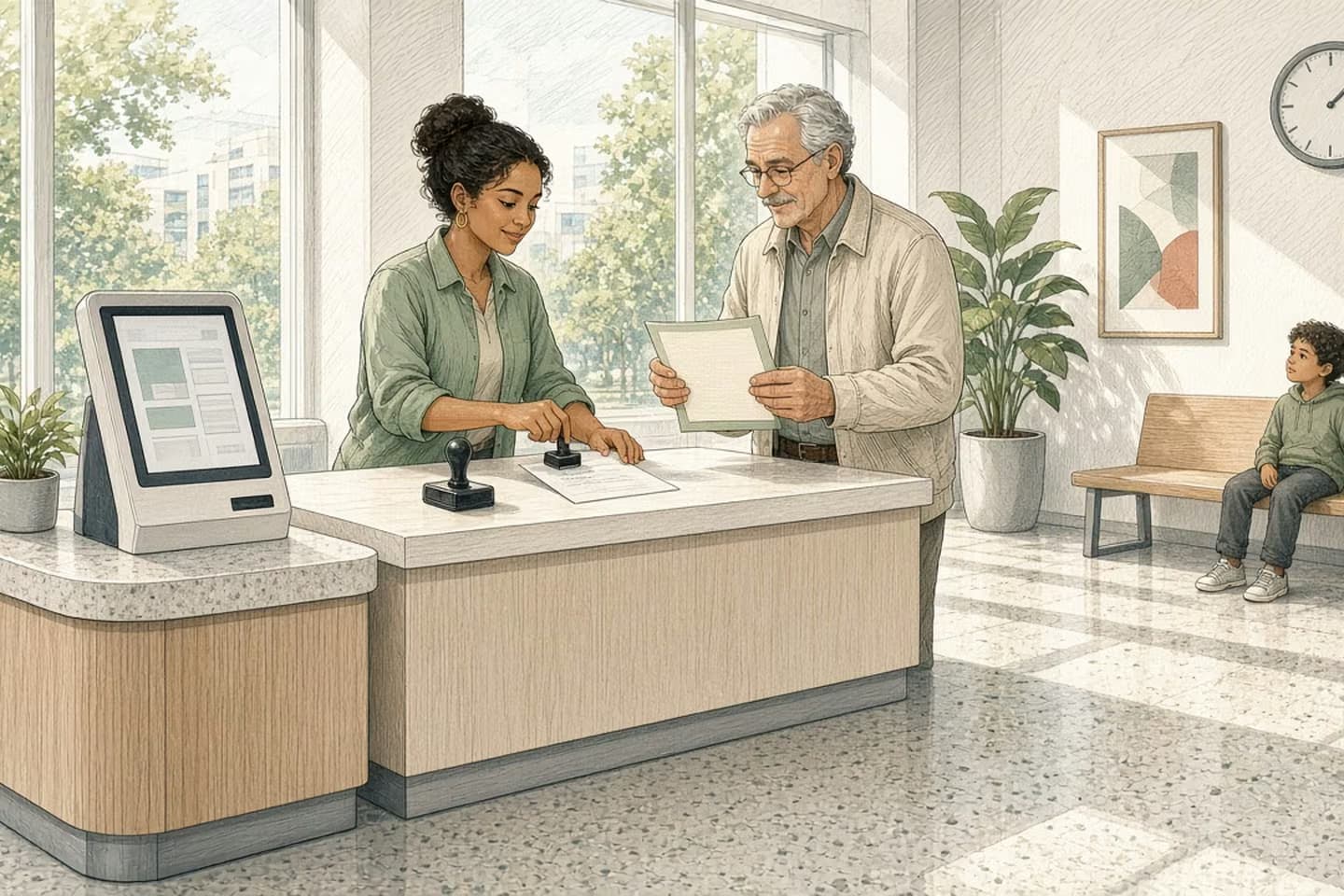
Send a clear application-received acknowledgment—with a timestamp the applicant can see—before the statutory or policy SLA clock starts. Separate received, accepted for review, and in review. Publish what starts the clock and what pauses it. Silence is not a status.
The call you already know
Someone submitted a permit packet at 4:58 PM Friday. The portal showed Submitted. No email. No SMS. No PDF receipt. Monday morning they call: "Did you get it?" The queue is still sorted by last opened by staff, so nobody opened it over the weekend. Staff open the file Tuesday, mark In review, and start counting SLA days from Tuesday because that is when a human touched the record. The applicant counts from Friday. Both will quote policy. Both will be partly right. The portal designed the fight.
This is not a rare edge case. It is the default whenever acknowledgment is treated as a notification preference instead of part of intake. Residents, contractors, and small businesses plan crews and financing around clocks they cannot see. If they cannot prove you have the packet, your SLA clock is a private opinion.
Checklist: acknowledgment before the clock
Use this as a gate before you call a portal live for a given application type:
If any box is unchecked, fix that before you add chatbots, AI status summaries, or vanity dashboards about average days to decision.
How the work moves
Intake statuses that keep the clock honest
- Submitted
Applicant finished the form; packets uploading or queued.
- Received
Ack with ID and timestamp; clock may or may not start yet.
- Accepted for review
Completeness passed; publish if this starts SLA.
- In review
Examiner or queue owns the file.
- Decision
Issued with its own durable notice.
If they cannot prove you have the packet, your SLA clock is a private opinion.
Name the states and the clock
Received is a mailroom fact. Accepted for review is a completeness fact. In review is an ownership fact. Decision issued is a legal fact. Borrowing Submitted for all four is how portals create where-is-my-application calls.
Write the definitions on one page for staff and a plain-language version for the public FAQ. Link them from the status page. Our note on status labels that mean someone can act is the cousin of this checklist—ack-before-clock is the intake half.
Policy may require the clock to start on receipt, on acceptance, or on assignment. Pick one, document exceptions, and instrument it. Do not let first staff open be an accidental clock start because that is when the UI enables a button. When you request more information, pause explicitly and show the pause on the applicant timeline. When materials return, show resume with a new timestamp. Hidden pauses are how you get audits that look like dereliction when the system was merely mute.
For government and public sector builds, treat acknowledgment as part of the service, not a notification nice-to-have. The ack is often the only proof a resident has that the agency holds their documents.
Decision guide
Silent intake vs acknowledged intake
| Consideration | Silent until staff open | Ack before clock |
|---|---|---|
| Applicant proof | A Submitted badge and hope. | Timestamped received record with ID. |
| SLA start | Often first human touch. | Named status published in policy. |
| Monday calls | Did you get it? | What happens next? |
| Audit story | Conflicting day counts. | Shared timeline evidence. |
| Staff incentive | Delay opening to delay clock. | Clock rules independent of curiosity. |
After hours, batch intake, and proxies
Overnight batch jobs that receive at 7:00 AM create a black hole for anyone who submitted at 9:00 PM. Prefer an immediate received state when bytes land, even if acceptance waits for business hours. Say that split in the ack: we have your files; completeness review begins on the next business day. Honesty beats a single glowing Submitted badge.
Holidays and emergency closures need the same treatment. If the clock pauses by policy, the portal should say so without requiring a phone-tree rumor. Integrators and attorneys filing on behalf of clients need the ack to name both the applicant and the filer. Otherwise the person who gets the email cannot prove standing when they call.
Deep links in the ack must land on the application while logged in and fail safely when the session expired. A received email that dumps someone at a generic login with no path back is how you generate a second call about the first ack.
Metrics and failure modes
Measure time from submission to received ack—should be minutes. Measure time from received to accepted. Measure applicant contacts that ask did you get it as a defect, not as inevitable volume. Do not celebrate SLA compliance computed from first staff open if policy says receipt starts the clock; that metric trains the wrong behavior. When you report publicly, use the same definitions as the portal FAQ. Dual dictionaries are how trust dies in hearings.
Staff soft-receive in email while the portal still says Draft creates dual systems—pick the portal as source of truth. Ack without ID is useless for follow-up. Batching acks to save money on email is not a savings if it buys call-center load.
Put this into practice
Map one permit or benefit type end to end. Mark where the applicant currently has no proof of receipt. Add the ack and split statuses before you tune SLA dashboards. Dashboards on a fuzzy start date only make the argument louder.
Pilot the ack email and the portal banner with a real sample packet. Confirm the deep link and the PDF receipt. Then train front-line staff to answer did you get it by reading the received timestamp from the shared timeline—not by promising to look into it as if intake were still a mailbag.
Publish the clock rules next to the apply button, not only in a PDF buried under How to apply. People decide whether to start based on what they can verify.
We design public portals where intake and clocks stay honest. If your SLA debates start with did you even get it—talk to us.
Related work: Wellthie.
We build alongside the people doing the work.
Bring us the problem you’re thinking about.