Ohio's Local Government Portal goes read-only November 23. Three questions for any portal cutover
Ohio's current Local Government Portal turns read-only on November 23, and the new one opens December 7. The gap is short. Use it to pressure-test how any portal vendor handles open work, passwords and history.
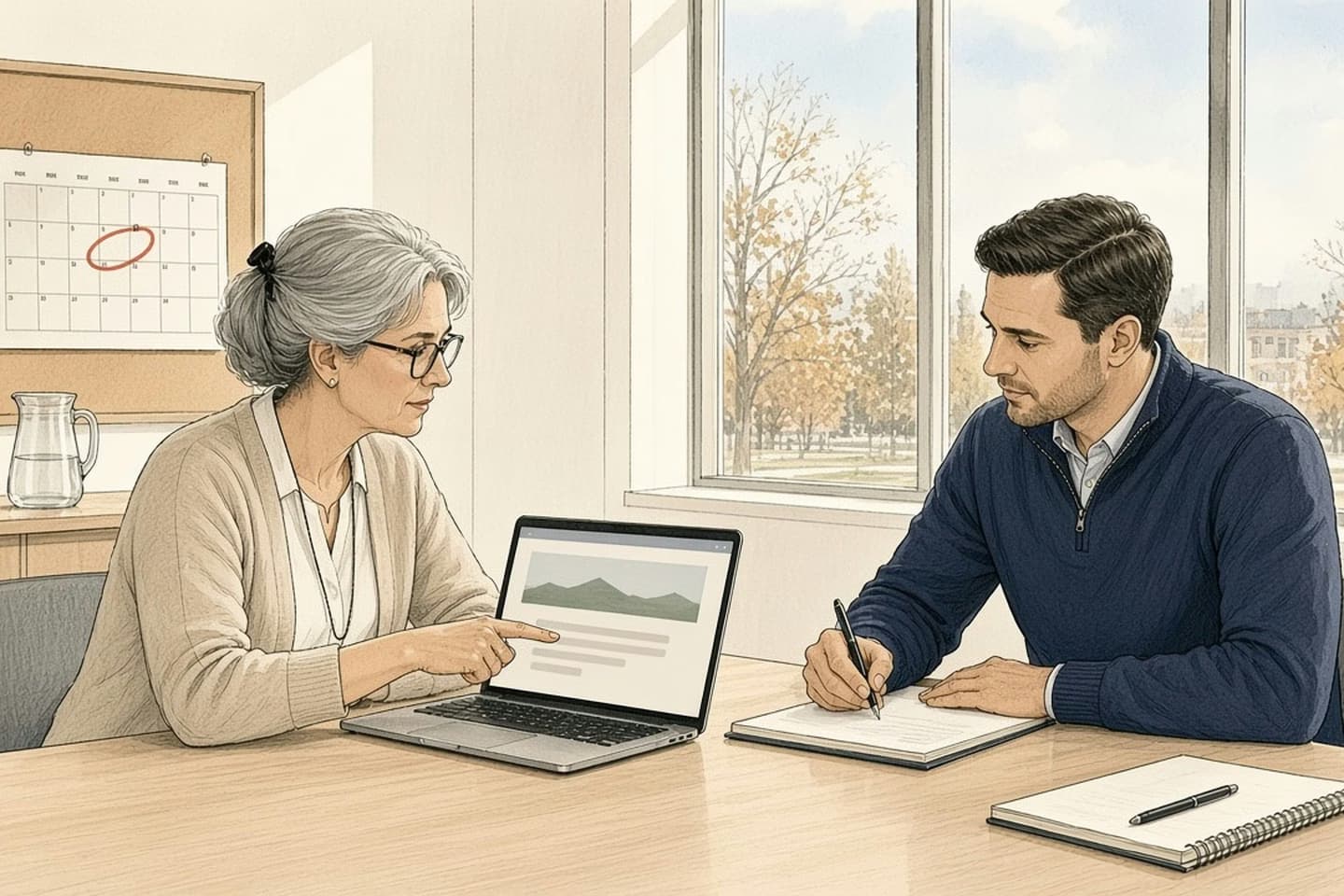
Ohio Taxation's Local Government Portal becomes read-only on November 23, 2026, and the replacement launches December 7. Outstanding Transfer of Taxpayer Information forms belong in the current portal before the 23rd; rate certifications can finish there or wait for the new system; users are auto-converted and must set a new password with two-factor authentication. Before you buy or renew any government portal, ask how open work survives a read-only window, who owns the password reset, and whether historical reports stay reachable without a scramble.
What Ohio just put on the calendar
On September 23, 2026, the Ohio Department of Taxation told local governments that a new Local Government Portal launches on December 7, 2026. The current portal becomes read-only beginning November 23. That is a two-week quiet stretch, not a long dual-run.
Outstanding Transfer of Taxpayer Information (TTI) forms need to land in the current portal by November 23. Tax rate certifications can finish there by the same date or wait and run in the new portal after December 7. New TTI submissions after launch live only in the new system, and they want a new bulk-upload template. Current users are auto-converted; after conversion they get an email to set a password and finish two-factor authentication. Historical reports stay reachable through a link to the old portal for a period, with more notice before that link goes away. The first report the new system generates is the Semi-Annual Report.
If you file through Ohio's LGP, the next three weeks are operational. If you buy or run portals for cities, counties or agencies anywhere else, the same bulletin is a free stress test for your vendor.
The read-only window, day by day
Treat November 23 through December 6 as a named phase in the runbook, not "the system is weird."
Before November 23. Sweep every open TTI. Confirm who still has a live login. Print or export anything you cannot afford to hunt for later. Finish rate certifications you don't want to relearn in a new UI.
November 23 morning. Expect read-only. Attempts to submit new TTIs should fail cleanly, with a message that points to December 7—not a silent error. If your own portals ever go read-only, write that message now.
The in-between days. Staff will still get calls. Give them a one-page answer: what can still be viewed, what must wait, which phone number takes emergencies. A two-week read-only window is not downtime theater. It is the moment open work either lands or disappears into a ticket.
December 7. New password, 2FA, new bulk template. The first report cycle will teach you whether training stuck. Keep the old-portal link bookmarked until Taxation says otherwise.
Sequence of work
Ohio LGP dates that matter
- Nov 23, 2026
Current LGP becomes read-only; TTI due in old portal.
- Nov 23–Dec 6
View and prepare; no new TTI in the old system.
- Dec 7, 2026
New LGP live; password + 2FA; new bulk template.
- After launch
Old-portal link for historical reports for a period.
A two-week read-only window is not downtime theater. It is the moment open work either lands or disappears into a ticket.
Three questions for any portal vendor
Ohio's bulletin answers these for its own cutover. Your next RFP should make the vendor answer them in writing.
1. What happens to in-flight work when the old system freezes? Ohio named TTI and rate certifications and gave each a door. Ask for a table: form type, last day to submit in the old system, first day in the new one, and what "stuck in draft" means on freeze day. If the answer is "we'll migrate drafts," ask for a rehearsal date and a rollback if the rehearsal fails.
2. Who owns the first login after conversion? Auto-convert is kind until the email lands in a spam folder or an ex-employee's inbox. Ask who triggers the password email, how 2FA is enrolled, and what the help desk does when the named admin left six months ago. Put that in the contract as a cutover deliverable, not a support FAQ.
3. How long do historical reports stay reachable without a special ticket? Ohio keeps an old-portal link for a period. Ask for the retention window in months, the export format, and whether "period" can shrink without a change order. Closed history is how auditors and council members judge whether the new portal was ready.
These questions sit next to the ones we wrote for Maryland's insurance portal empty-history problem in portal-switch-closed-task-history. Empty history and a short read-only window are cousins: both punish teams that assumed cutover was only a URL change.
Decision guide
Three contract questions
| Consideration | Ask | What good looks like |
|---|---|---|
| In-flight work | Named doors per form type. | Draft table + rehearsal date |
| First login | Who sends password + 2FA. | Staffed mailbox + ex-admin path |
| History | Retention in writing. | Export format + change-order rule |
| Messages | Read-only copy ready. | Resident-facing and staff one-pagers |
What to put in the runbook this week
If you are an Ohio filer, the runbook is short and due soon. Name an owner for the TTI sweep. Name a backup. Confirm every rate certification that cannot wait until December 7. Test that the password-reset mailbox you expect is monitored. Schedule a thirty-minute December 8 check-in to confirm 2FA worked and the new bulk template opens.
If you are buying a portal elsewhere, paste Ohio's dates into your evaluation sheet as a scenario: "Show us your plan for a fourteen-day read-only window." Vendors who only demo happy-path training will stall. Vendors who have done a freeze before will show you the message copy and the draft table.
Mirror the discipline in cutover-runbook-one-pager: one page, named owners, freeze rules, first-day checks. The Ohio bulletin is already halfway there for Taxation's own staff. Your vendor should match it.
How this shows up for residents and staff
Residents don't care which portal logo is on the screen. They care whether the form they started still exists. Staff care whether Friday's unfinished TTI is a Monday crisis. A read-only window that is announced early, with clear "submit by" lines, is a kindness. A read-only window that arrives as a surprise outage is how trust in "the new system" dies before launch day.
When you evaluate government and public sector portals, score the freeze story as hard as the feature list. Features are easy to screenshot. Freeze behavior is what you live through.
If you're mid-cutover or mid-buy
Ohio filers: finish open TTIs before November 23, decide which rate certifications wait for December 7, and treat the password email as a staffed event. Buyers elsewhere: add the three questions above to your next portal contract and ask for a rehearsal of the read-only message. If you want a second pair of eyes on the runbook, get in touch.
The same pattern shows up whenever a state moves filers between systems: Michigan's split tax cutover, Maryland's empty history on a new insurance portal, Oregon's land-agency applications that stay in flight. Ohio's bulletin is useful because it names the freeze date in public. Ask every portal vendor for that same clarity before you sign. If they cannot give you a read-only start date, a first-write date and a history plan, you are buying a demo, not a cutover.
For teams building or integrating public portals, our work on government and public sector projects usually starts with the freeze table, not the homepage mockup. Residents forgive a new password. They do not forgive a form that vanished between Friday and Monday.
One more practical note before you close the tab. Put the deadline on a shared calendar with a named owner, not a channel that everyone watches and no one owns. Committees do not ship carton changes, agent pilots or CDN cutovers. A single person who can say "green" or "blocked on X" keeps the work from restarting every Monday with the same open questions.
Related work: Sutton Place.
We build alongside the people doing the work.
Bring us the problem you’re thinking about.