What ongoing partnership should mean in a software contract.
After launch, decide who owns incidents, upkeep and change—and what evidence shows that coverage is real, not just promised.
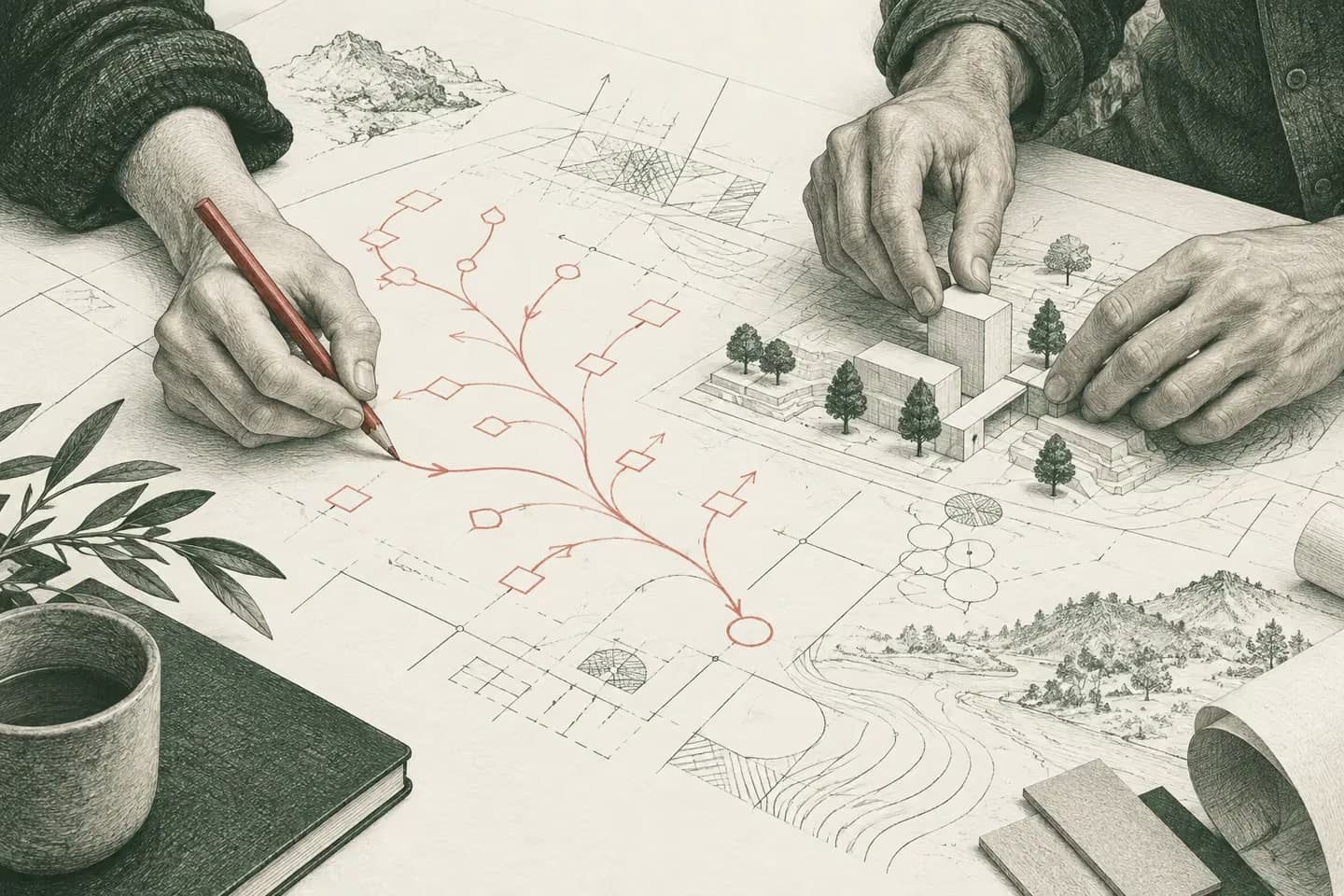
Ongoing partnership after launch means named coverage for incidents, upkeep and change, plus evidence those responsibilities are real. Agree who acts, how work arrives and what “done” looks like—separate from a technical handover of the system itself.
Launch is not the end of operating responsibility
A software engagement often treats launch as the finish line. Access is handed over, documentation is shared and the project is marked complete. The business still faces ordinary operating work: incidents, dependency updates, small corrections and the next change the market requires.
“Ongoing partnership” is the phrase many proposals use for that period. The phrase is only useful when it names who owns which class of work and how anyone can tell the coverage is real. Without those details, partnership is a mood, not an operating agreement.
This note is about the commercial and operating relationship after launch. It is not the same as a technical handover of repositories, accounts and runbooks—though the two should fit together. Handover answers whether another team can operate the system. Partnership answers who is expected to do which work while the system is in use.
Buyers often discover the gap after the first incident or the first change request. By then, assumptions have hardened. Scoping partnership early is cheaper than renegotiating under operational pressure.
Separate incidents, upkeep and change
Bundle these into one vague “support” line and disagreements follow. Keep them distinct when you scope the relationship.
Incidents are unplanned interruptions or failures that need diagnosis and recovery. Who is on point? How do requests arrive? What access do they need? What happens outside business hours, if anything has been arranged?
Upkeep is planned maintenance: dependency updates, certificate renewals, monitoring adjustments, routine checks that keep the system healthy. Who schedules it? Who approves riskier updates? How are results recorded?
Change is new or altered behavior: a workflow adjustment, an integration update, a feature the business now needs. How are requests prioritized? Who estimates and who accepts the result?
A named owner for each class is useful only when that person has access, context and a clear path to act. These are planning questions, not a promise of a particular service level. Write what you have actually arranged.
People sometimes collapse all three into “maintenance.” Maintenance is useful as a budget label only when everyone shares the same meaning. If one party hears “keep the lights on” and the other hears “build the next feature,” conflict is already scheduled.
How the work moves
Three classes of post-launch work
- Incidents
Unplanned failures: who diagnoses, recovers and confirms.
- Upkeep
Planned maintenance: who schedules, approves and records.
- Change
New behavior: how requests arrive, who estimates and accepts.
- Evidence
Visible intake, ownership and completion—not informal memory.
Partnership is credible when coverage is named and observable, not when the word appears in a proposal.
Ask for evidence, not only intent
Intent shows up in language. Evidence shows up in operating artifacts. Before you rely on “we’ll be there after launch,” ask what you will be able to observe.
Useful evidence is plain: a channel or ticket path that reaches the responsible party, a shared record of open incidents, a cadence for upkeep, a backlog or intake for change requests and a way to see what was done. If coverage depends on one person’s memory or an informal chat habit, it will degrade when that person is busy.
Walk through a recent hypothetical. An integration stops. A dependency needs an update. A stakeholder requests a small workflow change. For each, say who acts first, what information they need and how completion is confirmed. Gaps in that walkthrough are design gaps in the partnership, not details to invent later.
Avoid inventing metrics or copying generic SLA tables that do not match the system. Match the agreement to the actual software and the people who will run it.
Evidence also protects the partnership itself. When work is visible, both sides can adjust capacity and priorities without arguing about whether anything is happening. Opaque coverage breeds distrust even when people are trying hard.
Decision guide
Proposal language vs operating coverage
| Consideration | Vague partnership | Named coverage |
|---|---|---|
| Incidents | “We’ll support you after launch.” | Named owner, intake path and access to act. |
| Upkeep | Maintenance assumed but unscheduled. | Cadence, approver and record of what changed. |
| Change | Requests arrive informally with unclear priority. | Intake, estimation and acceptance are defined. |
| Proof | Trust rests on relationship language alone. | Both sides can point to visible operating work. |
Fit partnership to the system and the team
A small internal application and a multi-sided operating platform raise different partnership questions. So do teams that want to take ownership quickly versus teams that want a continuing engineering partner for the next problems.
Be explicit about the shape you want. Some relationships end in a clean handover to an internal team. Others continue as further operating problems emerge. TWIMCO’s work with Sutton|Place began with an operating need around verification and coordinated workflows, and the partnership continues as new problems appear. That pattern is about staying attached to the problem—not about private contract terms, which this note does not invent or describe.
Whatever shape you choose, align it with ownership of code, accounts and recovery documentation. A partner who is “available” but lacks access cannot help. An internal team that “owns” the system without a path for change requests will still feel abandoned. Make the next operating step explicit while the project is being scoped.
If an internal team will take over some classes of work while a partner retains others, draw that boundary in writing. Mixed models fail when everyone assumes the other side owns the awkward middle.
Write the partnership into the scope, not the appendix
Treat post-launch coverage as part of the engagement design. List the classes of work, the owners, the intake paths and the evidence of activity. Separate what is included for a defined period from what is quoted as further work. If something is out of scope, say so early—silence becomes an assumption.
Revisit the agreement when the system’s shape changes. New integrations, AI workflows or additional participant roles can shift who must respond and what “upkeep” means. Partnership language should track the operating model, not freeze a paragraph written at kickoff.
The useful test is simple: after launch, can both sides point to who owns the next incident, the next upkeep item and the next change—and show where that work is visible?
Include a simple review point after launch—not a ceremony, a check. Confirm that incident intake works, upkeep is occurring and change requests have a home. Adjust the agreement where reality diverged from the plan.
Put this into practice
If you are buying or extending software work, bring partnership questions into scoping alongside handover and delivery. Read the Sutton|Place case study for how an ongoing partnership can stay attached to emerging operational problems. Technical ownership of repositories, accounts and recovery belongs in the handover conversation; commercial coverage for incidents, upkeep and change belongs here. Contact TWIMCO with the responsibilities you need named before launch—not after the first surprise. Name the coverage you need in the same conversation where you name delivery milestones. Partnership language that appears only at the end of a proposal is usually too late to shape the work.
We build alongside the people doing the work.
Bring us the problem you’re thinking about.