TikTok Shop allows AI-made product videos. It doesn't allow AI that changes the product
AI can make a product video in an afternoon now, and TikTok Shop is fine with that. What it won't accept is a video where the AI quietly made the bottle bigger, the color richer or the result faster than the real thing delivers.
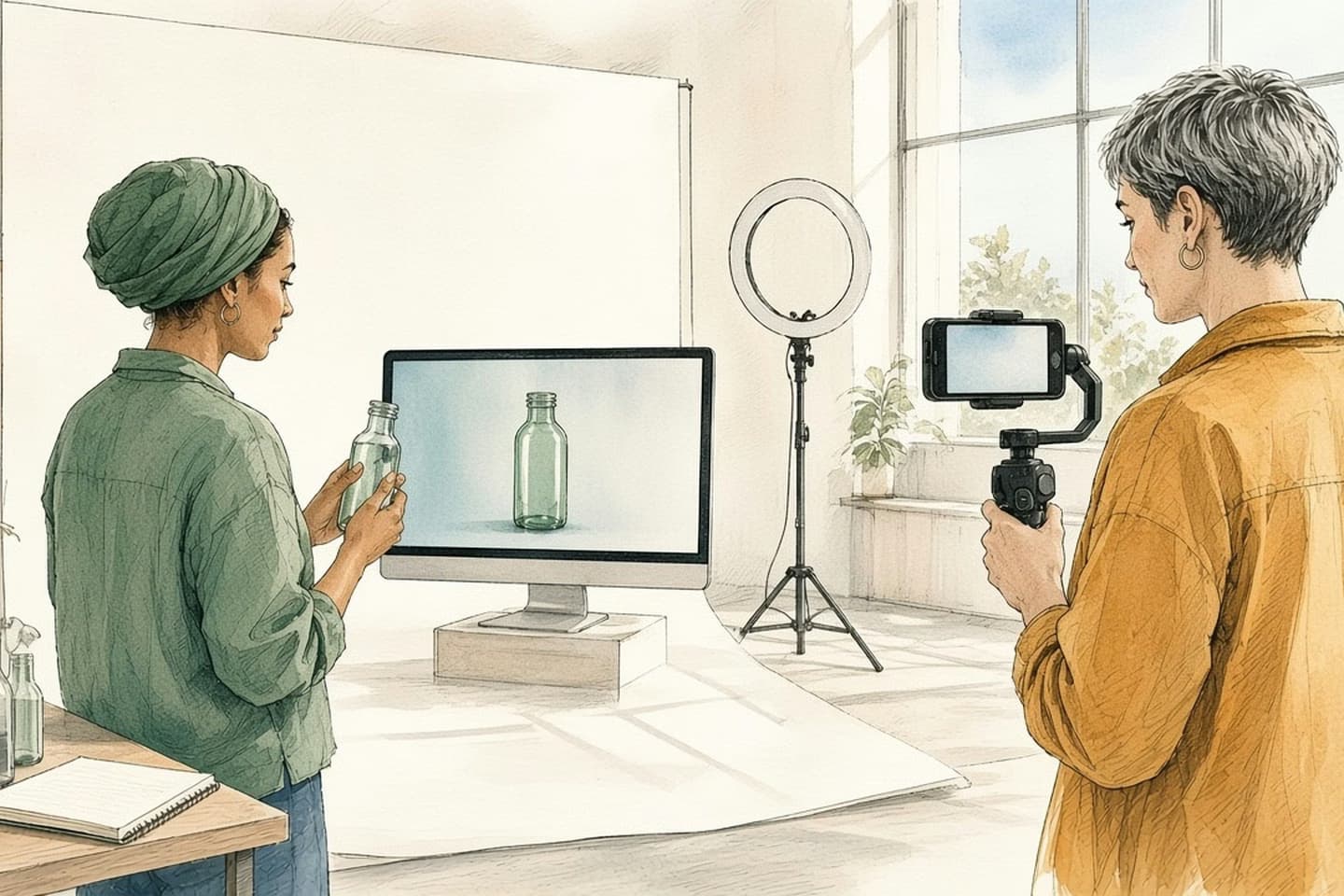
TikTok Shop US allows AI-generated and AI-edited content if it's disclosed and accurate. Label anything fully or significantly made with AI, either on screen or with the AI-generated content toggle. Never let AI change a product's size, color, material, quantity, bundle contents, features, compatibility, safety attributes or performance, or show results the real item can't deliver. Put one human check against the physical product before any AI-assisted video posts.
The rule, in one sentence
TikTok Shop's US policy page on AI-generated content starts from a permissive place. AI-generated content is allowed. You can use it for videos, images, audio, text and LIVE material, as long as you're transparent and accurate.
The rest of the page is about what accurate means. Don't use AI to mislead people about products, people or facts. Label content that is fully or significantly created or altered by AI. Don't impersonate anyone. And show products as they are: no AI changes to a product's size, color, material, quantity, bundle contents, features, compatibility, safety attributes or performance, and no unrealistic results or functions the real item can't perform. Product promotion videos must clearly and accurately display the physical product.
That's the line. AI can build the scene. It can't change the thing being sold.
The consequences scale. TikTok lists content removal and restricted visibility, then warnings, account restrictions and, for severe violations, permanent bans.
Five edits that cross the line
Most violations won't be anyone setting out to deceive. They'll be ordinary edits that an AI tool makes too easily.
The upscale that changes the color. An AI enhancement makes a dusty-rose sweater look like a rich raspberry. It looks better. It's also not the sweater.
The bigger bottle. A generated lifestyle shot puts the product in a hand, and the model guesses the scale. A 2-ounce serum now looks like 8 ounces.
The extra item. An AI-composed flat lay adds a second candle or a matching pouch that isn't in the bundle.
The faster result. A skincare or cleaning before-and-after compresses weeks into a swipe, or shows a result the product's own instructions don't claim.
The borrowed voice. An AI voiceover that sounds a lot like a well-known creator. TikTok bans using AI to imitate someone's identity, likeness or voice to create a false endorsement.
Each of these can come from a tool doing exactly what it was asked: make this look good. That's why the check has to happen after the tool, not inside it.
There's a business cost here that sits apart from the policy. A video that makes a product look better than it is sells to people who will be disappointed when the box arrives. Those orders come back as "not as described," and on TikTok Shop, returns and refunds feed into how individual products are scored; we looked at TikTok Shop's product-level quality score when it changed. The AI edit that lifted conversion this week can quietly drag the listing down next month.
The same applies to still images. The policy covers images as well as video, so an AI-generated hero photo on a product listing needs the same check as a creator clip.
Decision guide
Where AI help ends and misrepresentation starts
| Consideration | Allowed, with disclosure | Not allowed |
|---|---|---|
| Setting | An AI-generated kitchen behind the real product | AI replacing the product with a nicer-looking one |
| Voice | AI voiceover describing true features | An AI voice imitating a real person to endorse it |
| Results | A clearly illustrative animation of how it works | Before-and-after the product can't actually deliver |
| Bundle | AI-cleaned shot of what's in the box | Extra items or a larger quantity added by AI |
Disclosure tells the buyer AI was involved. It doesn't make a wrong product right.
Disclosure, and why it cuts both ways
If AI played a significant role in making a piece of content, you're expected to say so. TikTok describes two ways. Put it in the content itself, with on-screen text, a watermark, a sticker or a note in the description. Or switch on the "AI-generated content" toggle when you post, which adds a "Disclosed by creator as AI-generated" label.
Two details are easy to miss. TikTok says content won't be demoted or restricted just because the toggle is on, as long as it follows the rules, so there's no reason to avoid it. And false disclosure is itself a violation in both directions: failing to label significant AI use, and labeling content as AI when it isn't. Content made with TikTok's own AI effects is labeled automatically, but anything made with outside tools is on you.
Disclosure tells the buyer AI was involved. It doesn't make a wrong product right.
One check before it posts
The practical answer is a single review step, owned by a person, between any AI-assisted asset and the post button.
The reviewer needs the real product, or a current, unedited photo of it, next to the video. They check the attributes TikTok names, frame by frame: size, color, material, quantity, what's in the bundle. They check every effect the video shows against something you can point to: the product page, the instructions, ratings or test results. They check there's no face, voice, name or trademark you don't have permission to use. And they confirm the disclosure is there.
Keep the original footage and the AI-edited version together, with a note of which tool was used and who approved it. If a video is ever questioned, that record is the fastest way to show what changed and why it was acceptable.
How the work moves
One check before an AI-assisted video posts
- Real product in hand
The reviewer has the physical item, or a current photo, next to the video.
- Attributes
Size, color, material, quantity and bundle contents match frame by frame.
- Claims
Every effect shown is supported by the listing, instructions or test evidence.
- People
No face, voice, name or trademark used without permission.
- Label
Disclosure on screen or the AI-generated content toggle switched on.
Creator content you didn't make
On TikTok Shop, a lot of the content selling your product is made by affiliate creators, not by you. The policy applies to them as well, and the product they misrepresent is still yours.
Give creators a short written note that says it plainly: AI is fine, label it, and never alter the product. Send them the reference photos you want them to match. When a creator's video changes the product, ask for a fix before the post builds momentum, not after the returns start.
This matters most where AI edits are tempting and buyers notice small differences: beauty, apparel, jewelry and home goods are the obvious ones. If your catalog is in one of those, make the brief part of how you onboard creators.
Put it into practice
Write the rule down for your team this week, short enough that people actually read it, and put it wherever content gets approved today, whether that's a shared drive, a project board or the chat channel where videos are posted for sign-off. AI can build the setting, the voiceover and the edit. It cannot change the product, invent a result or borrow a person. Everything AI-assisted gets one check against the real item and a label.
We've written before about reviewing AI-generated product imagery before it goes live. The same discipline applies to video, with one more risk: motion makes small changes harder to spot.
If you're building AI into product content and want a review step that keeps up with the volume, that's part of our ecommerce work. Talk to TWIMCO.
Related work: Nines Style
We build alongside the people doing the work.
Bring us the problem you’re thinking about.