A village paused its AI phone line when callers couldn't reach a person. Test the transfer before yours goes live
One resident called four times and never got through to anyone. Another spent two hours and finally drove to Village Hall. Orland Park's staff had tested their new AI phone agent, and it still couldn't hand callers to the operator. The fix was ordinary. Finding it took residents standing up at a board meeting.
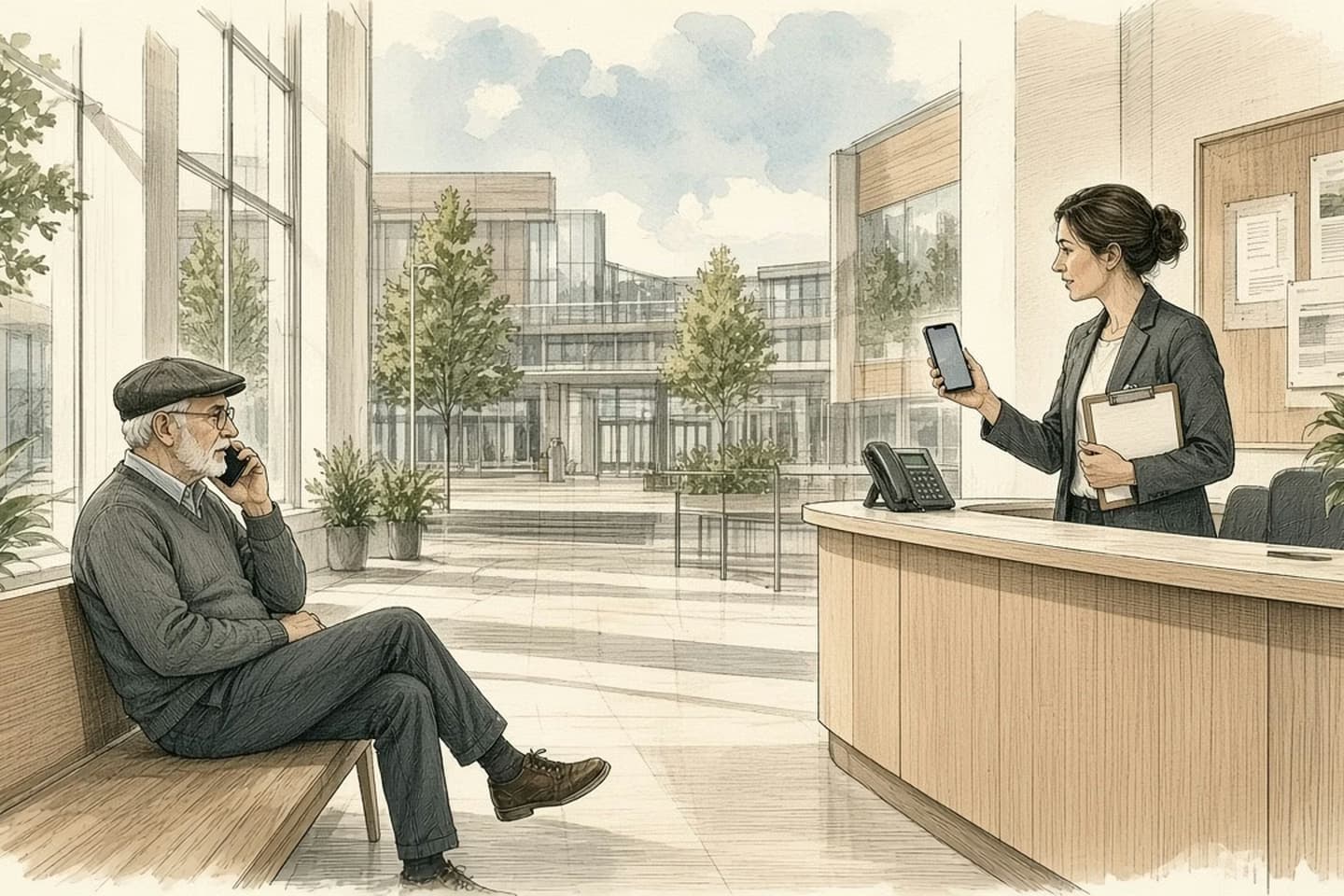
Orland Park, Illinois, paused its AI phone agent after residents told the Village Board in October they couldn't reach a person. The village's IT director said the system couldn't transfer callers to the operator or Parks and Recreation because of the phone numbers involved, and that staff testing hadn't caught it. Before any AI phone line goes live, call it from outside numbers, test every transfer, measure how many callers actually reach a person, and keep a human route that doesn't depend on the agent.
What happened in Orland Park
Orland Park, a village south of Chicago, introduced an AI agent for its phones and website this year. The mayor announced it in August and named it Humphrey, after the village's first mayor. The idea was a familiar one: keep service levels up without adding cost.
At a Village Board meeting on October 5, two residents described what calling the village had become. One said she'd called four times and never been connected to a person. The other had a simple question about a pumpkin event in the park. "It was like two hours of my time," she said, and in the end she went to Village Hall to ask in person.
According to a November 6 report in the Daily Southtown, carried by GovTech, the village paused the AI agent after those complaints. Its IT director thanked the residents and said that without them, the village wouldn't have realised it was broken. Staff had tested the system before launch and hadn't seen the problem. The cause, he said, was that the agent couldn't transfer callers to the operator or to Parks and Recreation because of the phone numbers associated with them. The village is working with its vendor to add numbers and bring the agent back. The mayor said the fault was in the phone system, not the AI.
Why staff testing missed it
This is the part every public agency should take seriously, because it isn't really about AI.
Staff test from inside. They call from desk phones on the same system, often to extensions they know, during office hours, asking questions they know the answer to. A transfer between internal lines can work perfectly while a transfer from an outside caller to the same department fails. Routing rules, caller ID, after-hours forwarding and which numbers the agent is allowed to dial all look different from outside the building.
The test that matters is the one a stranger runs on a Tuesday afternoon.
None of this means the AI agent was a bad idea. It means the most important feature of any phone agent is the moment it gets out of the way, and that path needs testing as hard as the answers do.
How the work moves
A launch test run from outside the building
- Outside lines
Call from personal mobiles, a landline and a blocked number, not the office phone system.
- Every door
Ask for the operator and for each department the agent can route to.
- Real questions
Use last month's actual calls: event times, permits, a billing dispute, a complaint.
- Off hours
Repeat at lunch, after 5 PM and on a weekend, when transfer targets change.
- The way out
Say 'person' early and often. Time how long it takes to hear one.
The test that matters is the one a stranger runs on a Tuesday afternoon.
Test the way residents will call
Before launch, and again after any change to the phone system, have people outside the IT team call the main number from their own mobiles, from a landline and from a blocked number. Give them a list of real questions taken from last month's calls: when does the event start, how do I renew a permit, why is my water bill higher, I want to make a complaint. Ask every one of them to request a person at some point.
Then check every route the agent can send someone down. The operator. Each department. The after-hours line. Voicemail. A route that works at 10 AM may land in a dead mailbox at 5:15 PM. Time how long it takes to reach a human when you ask for one directly. If the answer is "you can't," that's a launch blocker, not a tuning issue.
Measure whether people actually got through
The village's IT director shared September numbers at the board meeting: 2,687 calls, 71% transferred to a village department, 91% perceived as neutral and 6% negative. Those are the village's figures, and they're the kind most systems report by default.
But "transferred" isn't the same as "answered." If the transfer can't connect, a call can count as transferred and still end with nobody on the line. Ask your vendor for the share of transfers that a person picked up, the number of callers who rang back within a day about the same thing, and how many calls ended with the caller hanging up mid-menu. Those three numbers would have shown the problem before anyone had to stand up at a meeting.
Check a sample of calls by ear every week, too. Ten recordings tell you more about what residents are living through than a sentiment percentage.
Decision guide
Numbers that look fine, and the ones that tell you
| Consideration | Easy to report | Worth reporting |
|---|---|---|
| Transfers | Share of calls the agent tried to transfer | Share of transfers a person actually answered |
| Sentiment | Calls rated neutral or positive | Callers who called back within a day about the same thing |
| Resolution | Calls the agent closed | Calls closed with the right answer, checked by a person |
| Complaints | Formal complaints logged | People who gave up and came in, emailed or posted instead |
Put the transfer in the contract
Most agencies buy these systems from a vendor, often through a reseller, layered on top of a phone system from someone else. That's how a problem ends up described as "in the phone system, not the technology." From a resident's point of view, there's no difference. They called, and nobody answered.
So write the handoff into the agreement. Name the numbers the agent must be able to reach, and require the vendor to show a successful outside-line transfer to each one before go-live and after every change. Ask for the transfer-answered rate in the monthly report, not just call volume and sentiment. Agree who fixes a broken route and how fast, and who tells the public when the agent is paused. If the agent sits on a carrier or phone platform the vendor doesn't control, say who is responsible for testing the join between them.
None of that is exotic. It's the same discipline you'd apply to a new switchboard. The AI just makes it easier to forget, because the demo sounds so capable.
Keep a way around the agent
Every AI phone line needs a human route that doesn't depend on the agent working. A published direct number for the front desk. A keypress that goes straight to the operator. A staffed line during the first weeks after launch while the routing beds in. Put those on the website next to the main number, not buried in a menu.
Then decide in advance who can pause the agent, and what the trigger is. Orland Park did the right thing once it knew. The goal is to know sooner. Our earlier note on a county assistant that repeated a wrong phone number from an old press release makes the same case for reading what the agent actually says. And if your agent will ever take payments, decide what it's allowed to decide first.
If your agency is planning an AI phone or chat service and wants help with the test plan, the handoffs and the reporting before residents find the gaps, that's the work we do in government and public sector. Talk to TWIMCO.
Related work: Sutton|Place
We build alongside the people doing the work.
Bring us the problem you’re thinking about.