Pharmacies check the bottle against the order. Your packing bench can too.
A customer orders the blue one in medium and gets the green one in large. It's a small slip with a long tail of refunds, return labels and reshipping. Pharmacies, where a wrong item matters far more, built their work around a habit worth borrowing.
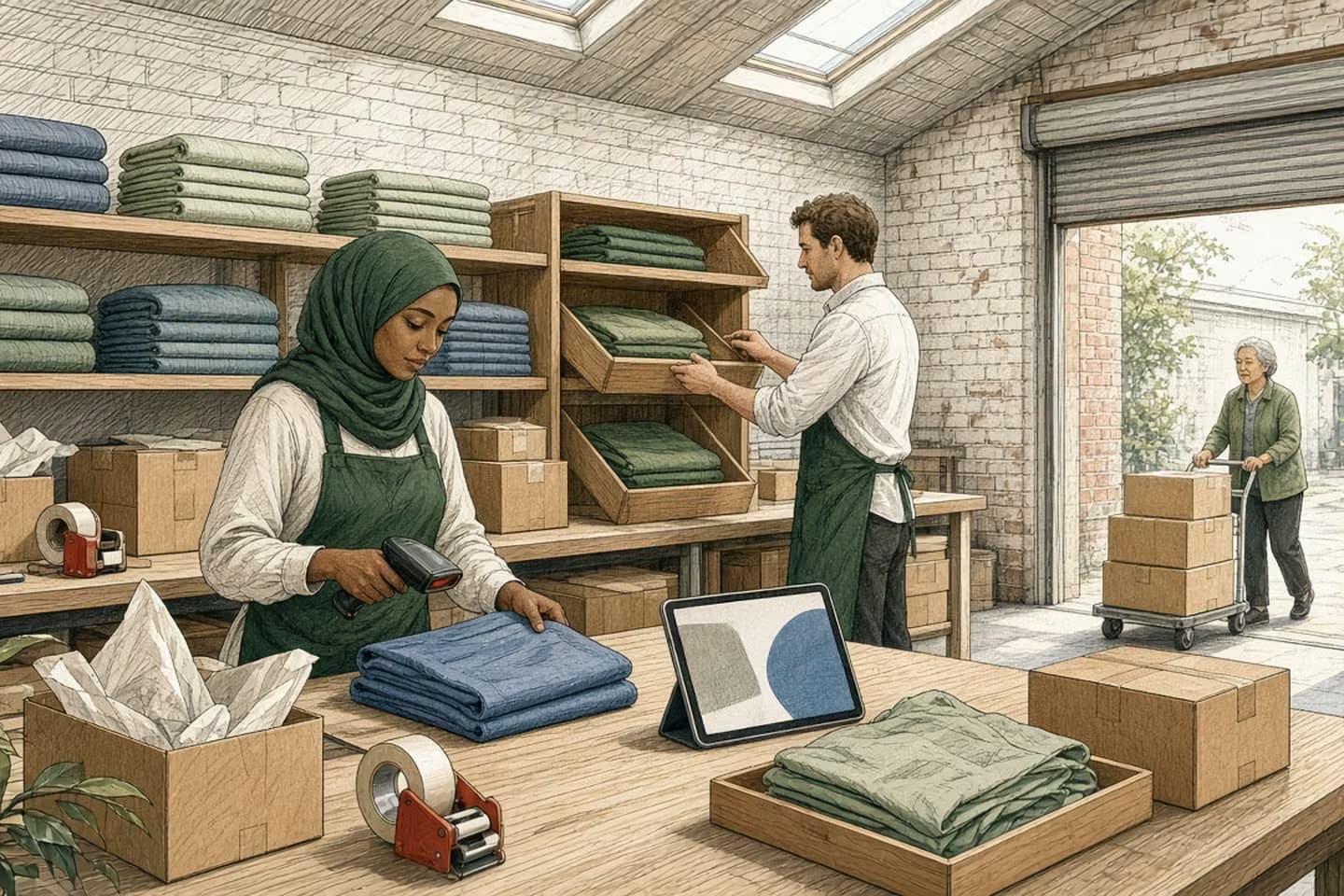
Wrong-item shipments tend to come from picks that looked right: a similar product, size or color sitting next to the right one. Borrow the pharmacy habit of checking what's been filled against the original order before it leaves. Scan each item's barcode against the order at the packing bench, show the packer a photo of what should be in the box, keep look-alike products apart on the shelves, and record every mismatch the check catches so you can fix the places it keeps happening. A scanner and a screen are often enough to start.
The mistake that costs three times
A customer orders a linen shirt in blue, medium. What arrives is the same shirt in sage, large. They sit right next to each other on the shelf, the packaging looks almost identical, and whoever picked it was on their fortieth order of the afternoon.
The mistake itself took a second. Fixing it takes much longer. Someone answers the customer's email. Someone sends a return label, or decides it isn't worth getting the shirt back. Someone picks and ships the right one, hopefully. Stock is now wrong in two places until the return arrives, if it arrives. And the customer, who was happy with the purchase, is now less sure about ordering again.
Most small warehouses deal with this by asking people to be more careful. That works for a while. Then it's busy again. There's a better model in a place where a wrong item matters far more than a wrong shirt.
What the pharmacy does
Think about what happens when a prescription is filled. In many pharmacies, the person who fills it isn't the last person to check it. Before the bag goes over the counter, the filled medicine is compared against the prescription itself, by a pharmacist, by a barcode scan, or both. Not against what someone remembers the prescription said. Against the original.
That habit has three parts worth stealing:
- The check is against the source, not against the picker's memory or the label they printed.
- It happens at a different moment, after picking, when the item is in hand and nothing else is competing for attention.
- Look-alikes are treated as a known risk. Medicines with similar names or packaging are a well-known source of mix-ups, so they're stored and handled with that in mind.
None of this assumes people are careless. It assumes that people who do the same task hundreds of times a day will sometimes see what they expect to see. The check is designed around that. Check the box against the order, not against your memory of the order.
Decision guide
The habit, borrowed
| Consideration | At the pharmacy counter | At your packing bench |
|---|---|---|
| Source of truth | The prescription itself. | The order line: product, variant, quantity. |
| Independent check | Filled medicine compared before hand-over. | Each item scanned against the order before sealing. |
| Look-alikes | Similar names and packaging handled as a known risk. | Confusable variants stored apart and flagged on screen. |
| Learning | Near misses noticed and acted on. | Every mismatch recorded and reviewed. |
Check the box against the order, not against your memory of the order.
Borrow it: scan against the order at the bench
The simplest version for a warehouse is a scan at packing. The packer opens the order on a screen, scans each item's barcode as it goes in the box, and the system says yes or no. Wrong color, wrong size, wrong quantity, missing item: it stops there, at the bench, not at the customer's door.
What you need:
- Barcodes on everything, one per variant, not one per product. If the blue medium and the sage large share a barcode, the scan can't tell them apart.
- A scanner and a screen at each packing bench, connected to your order system.
- A rule for what happens on a mismatch. The packer puts the item aside, gets the right one, and the mismatch is recorded. No overriding the scanner to keep the line moving.
Some warehouses scan at picking instead, with a handheld that confirms each bin as the picker goes. That helps, and it's worth doing if you have it. But notice it's the same person, at the same moment, under the same pressure as the pick itself. The pharmacy lesson is that the check is strongest when it happens later, by a fresh pair of eyes or a scan at a separate station. If you can only afford one, the packing bench is usually the better place for it, because it's the last moment before the order leaves.
If you sell bundles or kits, the check matters even more, because one order holds several items. Our note on selling bundles without overselling covers how to set those up so each component can be checked.
Borrow it: show what should be in the box
Barcodes catch most mix-ups. A picture catches the rest, and helps the packer before they scan. Put a clear product photo next to each line on the packing screen, with the variant spelled out in large type: color, size, quantity.
It sounds minor. It isn't. A packer who sees a sage-colored shirt on the screen and has a blue one in their hand notices before scanning. It's also the fallback when a barcode won't scan or a label is missing, which happens.
Small details matter here. Highlight the differences that cause trouble, such as size and color, rather than the product name everyone already recognizes. If you sell items where quantity is easy to miscount, show the number big.
How the work moves
One order through the bench
- Open the order
Photo and variant in large type for every line.
- Scan each item
One barcode per variant; yes or no from the system.
- Mismatch?
Set it aside, fetch the right one, no override.
- Record the catch
Expected, picked, shelf location, time.
- Seal and ship
Only after every line matches.
Borrow it: keep look-alikes apart, and write down every catch
Back to the shelves. If two variants are easy to confuse, don't store them side by side. Separate them, or put a visible divider and a label between them. Pharmacies treat look-alikes as a known hazard. A warehouse can do the same with a short list of its own.
Where does that list come from? From the check itself. Every mismatch caught at the packing bench should be recorded: which item was expected, which was picked, where they live on the shelves, who picked it and when. After a few weeks, patterns show up. The same two products, the same aisle, the same busy hour after lunch.
That record is the most valuable part of the whole setup. It turns "be more careful" into specific fixes: move these two apart, relabel that bin, add a photo to this listing so customers and pickers can tell the shades apart. It's the same instinct as naming the exception before you automate: understand the misses before you design around them. And if your counts drift because of returns that never come back, inventory truth drift is the next thing to look at.
Start small
You don't need a new warehouse system to do this. A lot of order and inventory tools already support scanning at packing, or can with a simple add-on, a cheap scanner and a tablet on the bench. Start with one bench and your most-confused products. Record every catch for a month. Then decide whether to roll it out across every order.
Expect the packers to be skeptical at first. The scan adds a few seconds per item, and nobody likes being checked. Share the catches with them. When they see that the scanner stopped a dozen wrong shirts going out last week, it stops feeling like surveillance and starts feeling like backup.
We work on fulfillment operations: connecting the order system, the warehouse and the people packing so the right thing goes in the box. If wrong items are a regular cost for you, let's look at your packing bench together.
Related work: Paddle8.
We build alongside the people doing the work.
Bring us the problem you’re thinking about.