Define shadow-mode success before you promote the agent.
Weeks into shadow mode, the agent is still proposing and people are still doing the work. Someone asks if it's time to let it act, and the answer is a shrug. Shadow mode only helps if you decided at the start what would count as ready.
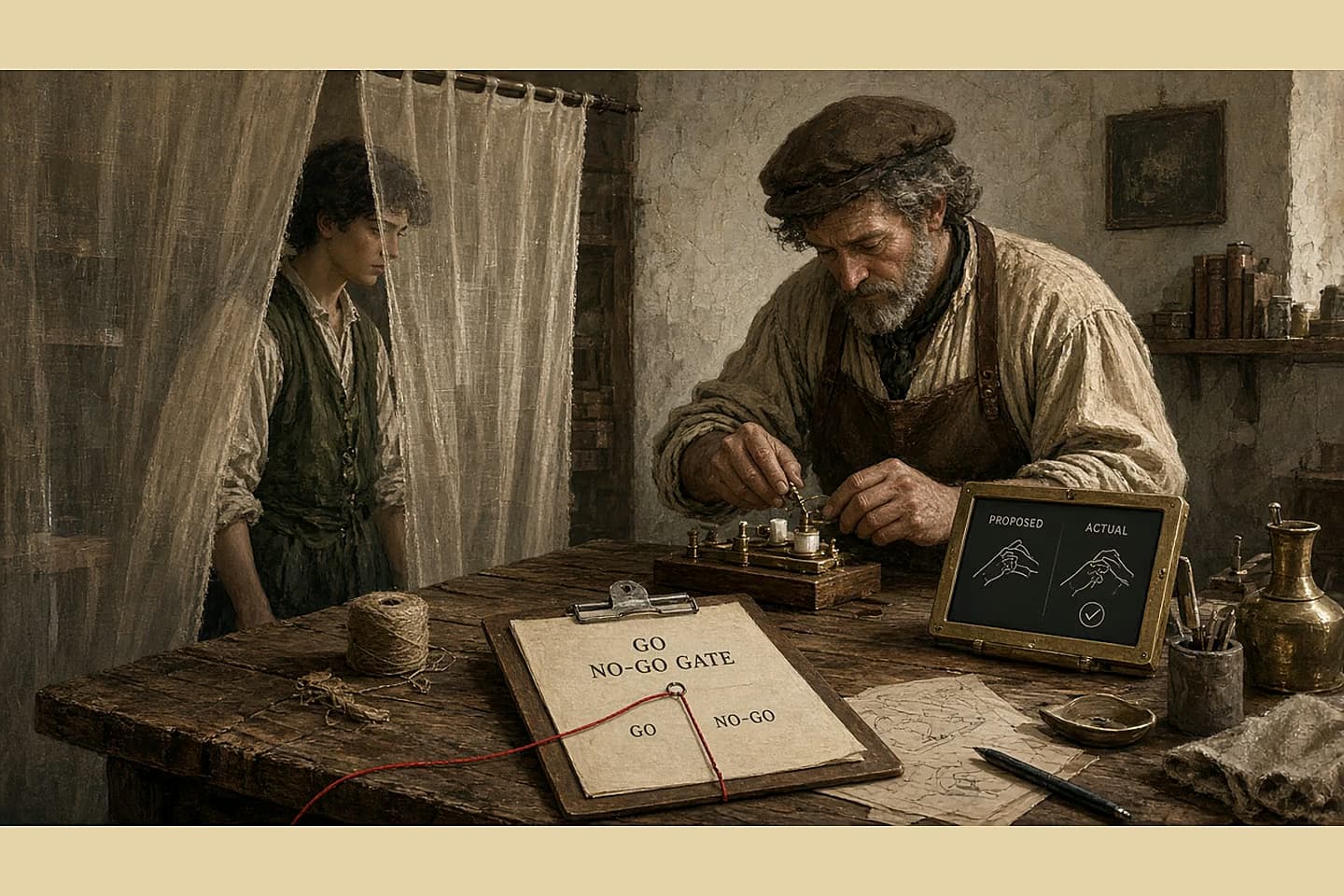
Before an agent leaves shadow mode, fill the TWIMCO Shadow-Mode Success Card: observation window, disagreement log owner, false-action definition and count method, promote signer, and an explicit go/no-go rule. Promote only when the card is complete and the signer accepts the residual risk in writing—not when the demo “feels ready.”
Shadow mode is a test, not a mood
A team turns on shadow mode. The agent proposes. People still act. Weeks pass. Someone asks if it is time to let it act. The answer is a shrug. It seems fine. Nobody defined fine. Nobody owns the disagreements. Nobody said what a false action would do to the decision.
Shadow mode is useful when it has an end. It is expensive theater when it runs until someone feels ready.
Write the end before you start
Window. When it starts, when it ends, and which cases are in the sample. If you only shadow the easy ones, you have not tested the job.
Disagreement log. Who writes down the cases where a person would not do what the agent proposed, and why.
False action. What would have been harmful if the proposal had been executed. How you count it. An empty log is not a perfect score. It is a log nobody kept, or a sample that avoided the hard cases.
Signer. The person who may say promote, in writing, including the risk they are accepting. A chat reaction is not a signature.
Go or no-go. The rule, written before the window, not invented at the end to match the feeling in the room.
Promote only when the page is complete and the signer accepts what is left. Not when the demo feels ready.
How the work moves
Fill the success card before the window
- Job under test
One-sentence responsibility when promoted.
- Observation window
Start, end, environments—not an open vibe.
- Disagreement log
Compare proposal to action; file reason codes.
- False-action rule
Define harm-if-executed and how you count.
- Go / no-go
Named signer applies a written promote rule.
Shadow mode without success criteria is just a long period of hoping quietly.
During the window
On day one, put a fake disagreement in the log and confirm someone can find it. If the log is hard to write, people will not write it.
Look at the reasons each week. If they cluster, the job is wrong, the policy is wrong, or the sample is wrong. Fix that before anyone talks about promotion.
Do not extend the window by silence. An end date that slips without a decision is how shadow mode becomes the product.
Promote is a release
Letting the agent act is a permission change. Treat it like one. Who approved it. How you put it back. What you will watch the first day.
If the disagreement log is empty, do not celebrate. Stay in shadow, or admit you were not looking.
Sequence of work
Hoping vs deciding
- Before day one
Success card complete; log path dry-run.
- During window
Disagreements filed; weekly reason-code review.
- Midpoint
Confirm job still matches what is shadowed.
- End
Signer applies go/no-go; residual risks written.
Put this into practice
Fill the page before the agent proposes anything a customer or a ledger could feel. Verify the log on day one. At the end, apply the rule you wrote at the start.
When you are ready to build that into the product, start from AI applications and agents.
Related work: Spin Market.
We build alongside the people doing the work.
Bring us the problem you’re thinking about.