Start with the handoff.
The most useful place to automate may be the space between two perfectly good tools.
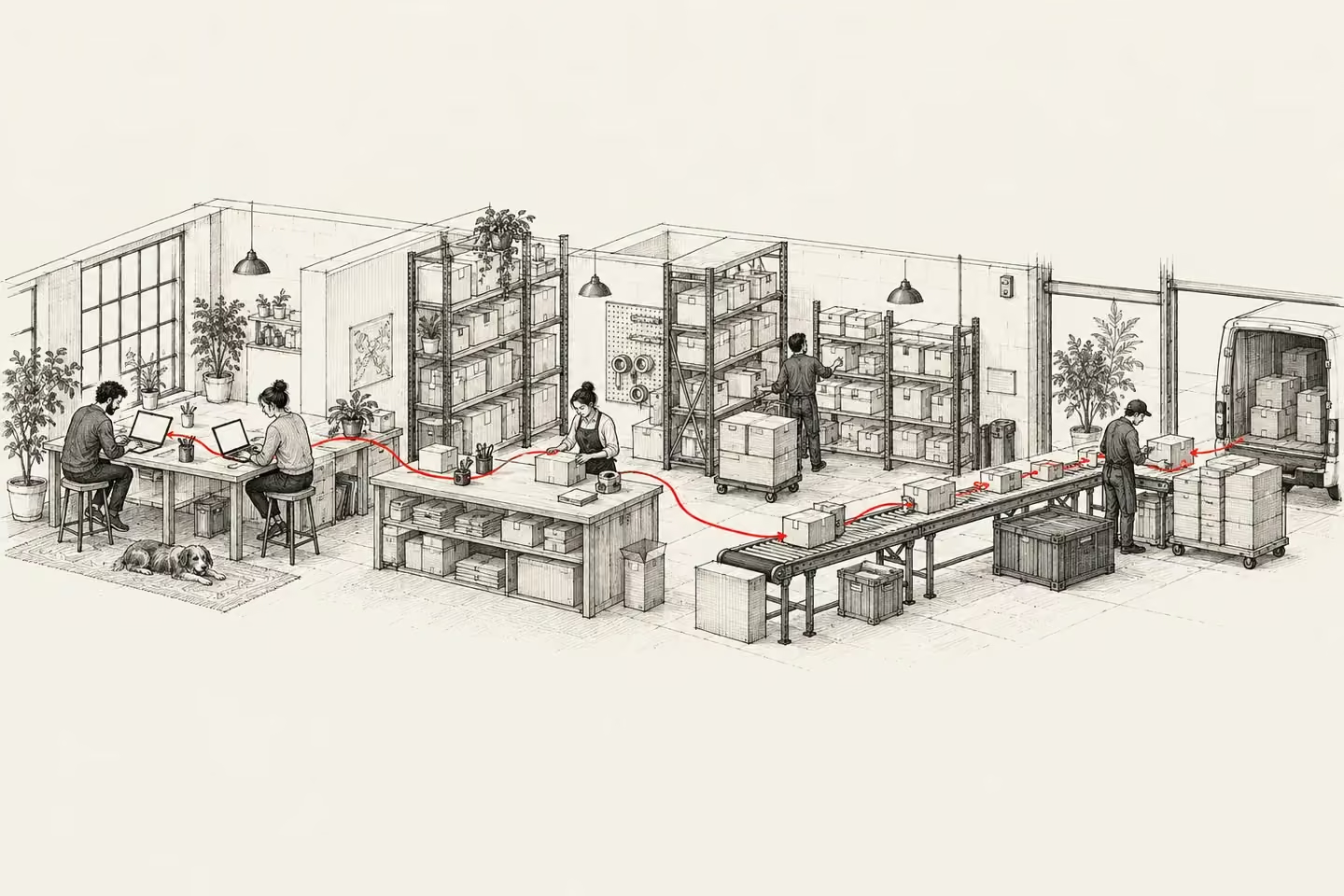
The work nobody put on the diagram
An order arrives. Someone checks a spreadsheet, pastes a reference into a message, and asks another team to confirm a detail. Nothing about that sequence feels remarkable. It may happen dozens of times a day.
On an architecture diagram, the systems look connected. In the working day, a person is doing the connecting. They know which field can be trusted, who will answer quickly, and what an unusual status really means. That knowledge keeps the operation moving, but it also makes the process difficult to see.
Follow one thing all the way through
Before choosing a tool, choose an actual piece of work: one order, one request, one approval. Follow it from the moment it arrives until someone can honestly call it finished.
At every handoff, ask three questions. What information moves? Who becomes responsible? How does that person know the work is ready? If the answer involves checking an inbox, remembering to follow up, or interpreting an unexplained spreadsheet column, you have found a useful place to look more closely.
The most useful place to automate may be the space between two perfectly good tools.
The exception is part of the process
It is tempting to automate the clean sequence first and leave the unusual cases for later. That can produce a fast route for ordinary work and a confusing pile of everything else.
Instead, examine a recent exception with the person who resolved it. What first signaled the problem? What did they need to know? What could they safely decide? A good workflow carries that context to a responsible person. It should also show whether the issue is waiting, being handled, or resolved.
This is often where a small integration does more than a large dashboard. The goal is not another place to watch the work. It is a clearer way to move it.
Choose a boundary you can trust
A useful first automation has a clear beginning, an observable result, and an owner. For example: when an order cannot be routed, gather its context and assign a review. That is a more testable starting point than ‘automate fulfillment’.
Work through real examples with the team. Include duplicates, missing information and a correction after the process has started. Decide what happens when a connected system is unavailable. These details determine whether people can rely on the new path.
A better question for next week
Ask someone on your team: ‘What do you have to remember because the system doesn’t?’ Then sit beside them while they do that task.
The answer may point to a new application. It may point to a simple integration or a clearer responsibility. Either way, you will be starting with the actual work, and that is a much better foundation for useful automation.
We build alongside the people doing the work.
Bring us the problem you’re thinking about.