Score catalog truth before you publish the claim.
Photos, bullets, a price. The page looks finished, but a listed size was never received, the stock number is a cache, and the copy promises a ship speed you no longer keep. Publishing a listing is a promise to fulfill it.
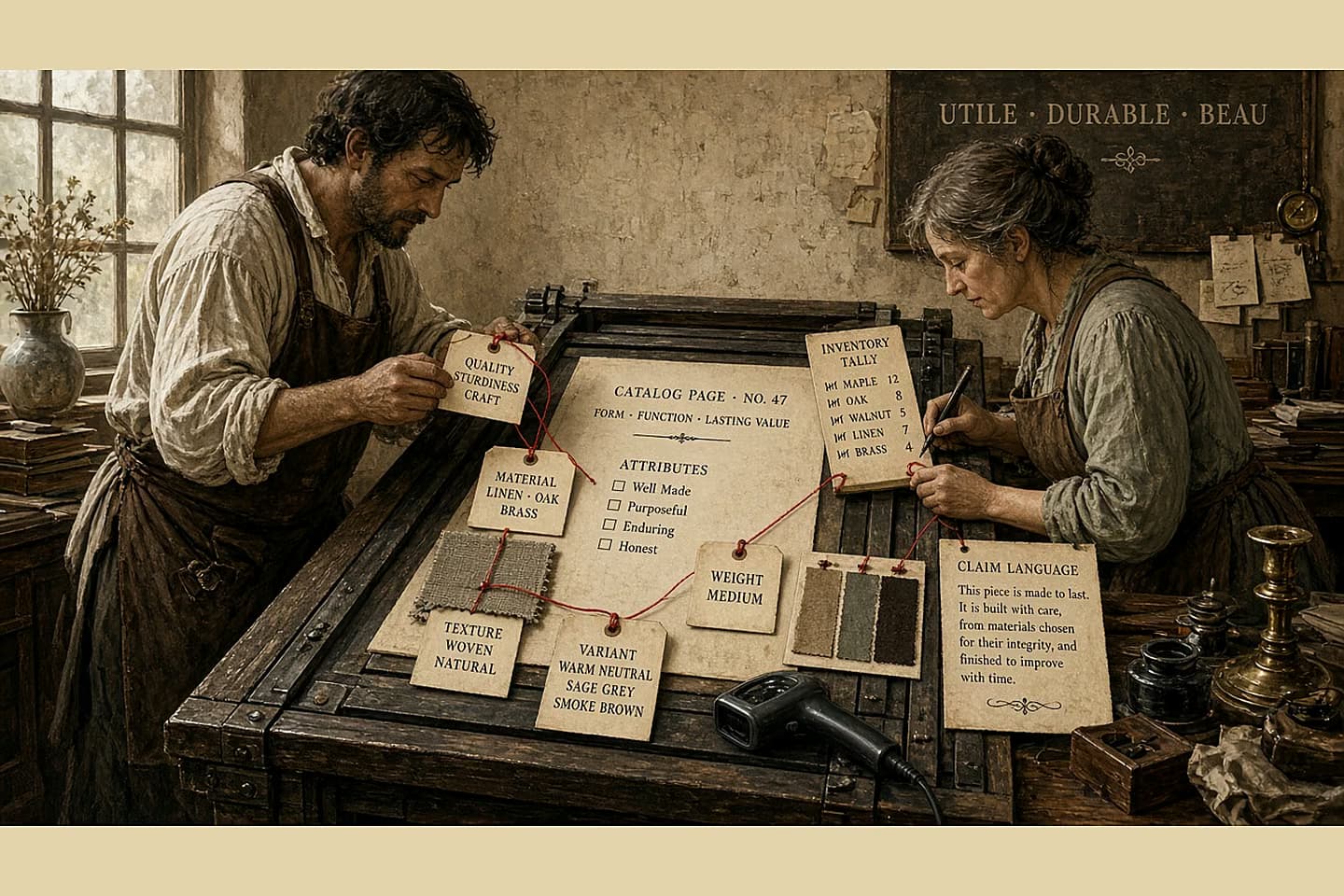
Before a listing goes live, score attributes, variants, inventory truth, and claim language 0–2 with evidence from the systems that actually fulfill the promise. Apply a publish gate: any zero blocks publish; Conditional needs a dated fix owner. The TWIMCO Catalog Truth Scorecard turns “looks right on the PDP” into an operating check.
Publish is a promise
A product page can look finished. Photos, bullets, a price. Meanwhile the attributes disagree with the warehouse, a size on the page was never received, the inventory number is a cache, and the copy promises a ship speed you no longer keep.
Publishing commits you to what can be picked, packed, authenticated, or refunded. Treating it as a content task hides that.
Score four things before it goes live
Score each 0, 1, or 2. Write the evidence: which system you checked, not whether the page looks tidy.
Attributes. Do the facts match the thing you can ship? 0 means a field the warehouse cannot use, or a fact that contradicts it.
Variants. Does every option on the page exist where fulfillment looks? 0 means a size or color you are offering and do not have.
Inventory. Is the number the one fulfillment trusts, not a cache from this morning's ad export? 0 means you would not bet a customer on it.
Claims. Does the language match a policy someone can keep? Ship windows, condition, final sale. 0 means the sentence would still be on the page after the policy changed.
Any zero blocks publish. A one can go out only with a named person and a date to fix it.
How the work moves
Score catalog truth before publish
- Attributes
Required fields complete; source of truth named.
- Variants
Sellable variants mapped to fulfillable ids.
- Inventory truth
Authoritative count or allocation—not only cache.
- Claim language
Titles and badges bound to operable policies.
A listing can look complete and still publish a promise no warehouse can keep.
Run it on a batch, not a feeling
Take the next set of listings that look ready. Score them with the sources open. Attribute theater is a rich spec the warehouse cannot find. A ghost variant is a size the page offers and the building has never seen. A cache pretending to be truth is how you apologize for an oversell.
Bind claim phrases to rules operations can keep. If the rule changes, the phrase has to be able to change with it. Otherwise you are publishing a sentence you can no longer make true.
The gate is the point
"Looks right on the page" is not a score. The page is a promise about a fact somewhere else. If you cannot point at the system that will fulfill it, you are guessing in public.
Do this before you add more storefront polish. Polish on a false listing is a faster way to disappoint someone.
Decision guide
Looks publishable vs passes the gate
| Consideration | Looks ready on the PDP | Passes catalog truth |
|---|---|---|
| Specs | Long bullet list, mixed vocabulary. | Required attributes from a named source. |
| Options | Sizes shown because design had room. | Variants mapped to what can ship. |
| Availability | Cached number, unknown age. | Authoritative inventory with refresh rule. |
| Promises | Marketing speed and condition claims. | Claims gated by ops policy. |
Put this into practice
Score the next high-risk batch. Name the attribute source and the inventory source on the sheet, not in hallway lore.
The operating side of that promise is fulfillment and operations.
Related work: Paddle8.
We build alongside the people doing the work.
Bring us the problem you’re thinking about.