The TWIMCO notebook
Field notes.
Useful observations from inside the work.
For people building a better way.
Commerce · 32 notes

Opening note / Commerce
Get a phone or email on the order before you ship on a balance due
A deposit lands in chat. The handle goes quiet. The parcel is already packed. Marketplace and social sellers who ship against a balance need a durable contact on the order—not only a username.
Read the note ↗︎
Open Shopify's Agentic page before the next AI channel enrolls you
Unless someone on your team has opened Sales channels > Agentic, your Shopify catalog is already being offered to AI shopping assistants, and the next one will be added for you. Here's how to walk that page and decide.
Read the note ↗︎
If the store stops tonight, what happens to the pre-orders?
On October 12, Zavvi's webstore was replaced by an administrators' notice, and every unshipped pre-order stopped with it. If your store takes money months before the box exists, picture that morning now, while you can still change it.
Read the note ↗︎
Check which checkout option is selected before the customer notices
Somewhere on your checkout or payout screen, one option is already selected. If that default costs the customer more—or you more—the quiet choice is doing work you never wrote down.
Read the note ↗︎
New sellers on your marketplace need a first sale, not a better ranking formula.
Sellers sign up, list a few things, hear nothing for a month and quietly leave. Marketplace founders bring us this question in one form or another, so here's how we'd think about it, starting with what a brand-new listing looks like to a buyer.
Read the note ↗︎
Plan for the week your payouts stop.
Sales are coming in and the money isn't arriving. Payment providers can hold back funds or pause payouts when an account suddenly looks different, and the stores that cope are the ones that decided what to do before it happened.
Read the note ↗︎
When people go around your marketplace, they're telling you something.
In the third message, a supplier slips in their mobile number. A week later, a regular customer stops booking through you but still seems to be getting the work done. Here's how to read those signs, and why blocking phone numbers rarely fixes what they mean.
Read the note ↗︎
Some of your apps can edit your checkout.
One shopper on a Shopify keyboard store pressed Checkout and was quietly sent to a copy of the payment page on another site. He noticed. Most people wouldn't. Here's how to check where your own Checkout button really goes.
Read the note ↗︎
Most delivery problems were typed into the checkout.
A parcel comes back marked "insufficient address" because the apartment number never made it past the checkout form. Nobody did anything wrong, exactly. Seven plain rules keep that address true from the moment it's typed to the moment it's delivered.
Read the note ↗︎
Count the logins that can reach your customers.
On Tuesday, ASOS customers got a push alert from the ASOS app saying ASOS had been hacked. The attackers sent it. They got in through one login to a marketing tool, not the store itself. If you run a store, here's how to find your own version of that login.
Read the note ↗︎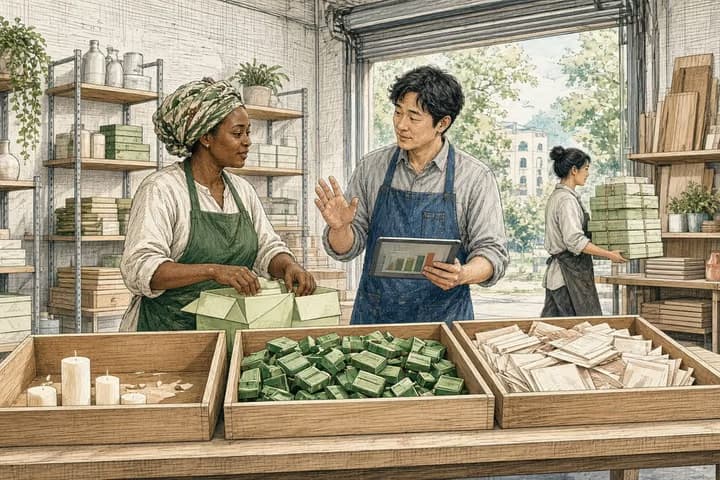
A gift set is three promises sold as one.
When the candle sells out on its own, the holiday set that contains it often keeps selling. Bundles look like one product on the storefront and behave like several in the warehouse, and peak season is when that difference gets expensive.
Read the note ↗︎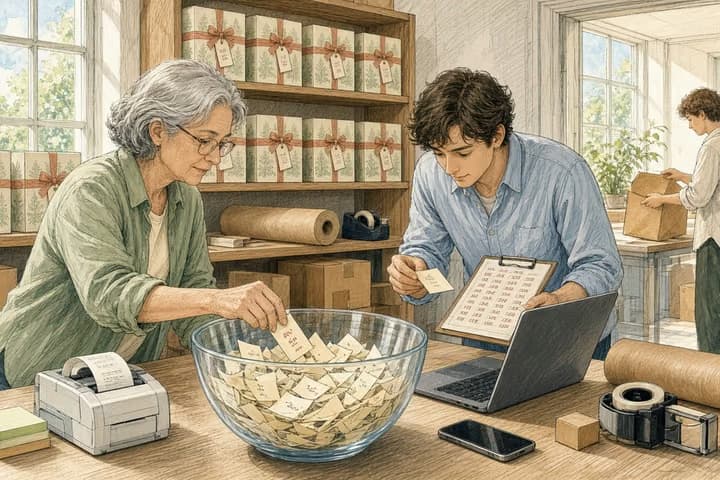
Before a limited drop, decide who should end up with it.
Target's overnight Pokémon card drop went sideways again. If you sell anything in short runs, the real question isn't how fast your checkout is. It's who you want holding the box when it's over.
Read the note ↗︎
Two customers booked the same Saturday. Here's what actually broke.
Saturday, 9:55 a.m. A family with a toddler and a photographer is at the studio door, and so is a fashion crew with a rail of clothes. Both have confirmations. Walking back through how it happened shows that nobody did anything wrong, which is exactly the problem.
Read the note ↗︎
Your wholesale customers want to reorder, not browse.
Most wholesale buyers already know what they want. It's roughly what they ordered last month, sent over from a PDF price list by email. Build the portal for that before anything else.
Read the note ↗︎
Before you buy AI search, read what people couldn't find.
Somewhere in your analytics is a list of things people typed into your search box and got nothing back. It's the most honest research you own, and it often explains more than a new search engine would.
Read the note ↗︎
Name auth, capture, and settle before checkout ships.
Order placed, says the screen. Somewhere else the card hold may or may not exist and the stock may or may not be reserved. When those feel like one moment and are really several, you end up shipping what you never captured.
Read the note ↗︎
A macro may not invent a promise.
A customer asks where their order is, and the macro answers in a confident, complete sentence. The warehouse and the payment record never said that sentence. Support copy should repeat promises the system already holds and escalate the rest.
Read the note ↗︎
The route should not live in one person’s head.
Someone on your team knows which carrier will take a crate that size and which lane to avoid this season. Their spreadsheet holds names and rates, but the judgment lives in their head. Sit with them before you build the shipping flow.
Read the note ↗︎
The quote is not the charge until you prove it.
The buyer agreed to a total. Then the payment capture came out different, or the invoice did, or both. Nobody lied. Three systems each told a local truth, and those numbers are worth lining up before the cart is allowed to go out.
Read the note ↗︎
Before peak, re-read last year's rescued orders.
Carrier peak fees widen in late October. Before then, pull ten orders your team had to rescue last holiday and follow each one back to the moment it first went wrong.
Read the note ↗︎A familiar problem? Let’s look closer.
Tell us where you want to go. We’ll find the first thing worth changing.
Tell us about it ↗︎