Photo proof before the carrier claim—and before you reship
The customer sends a blurry kitchen photo. Someone refunds and reships the same day. The carrier claim dies later for lack of evidence you could have asked for on hour one.
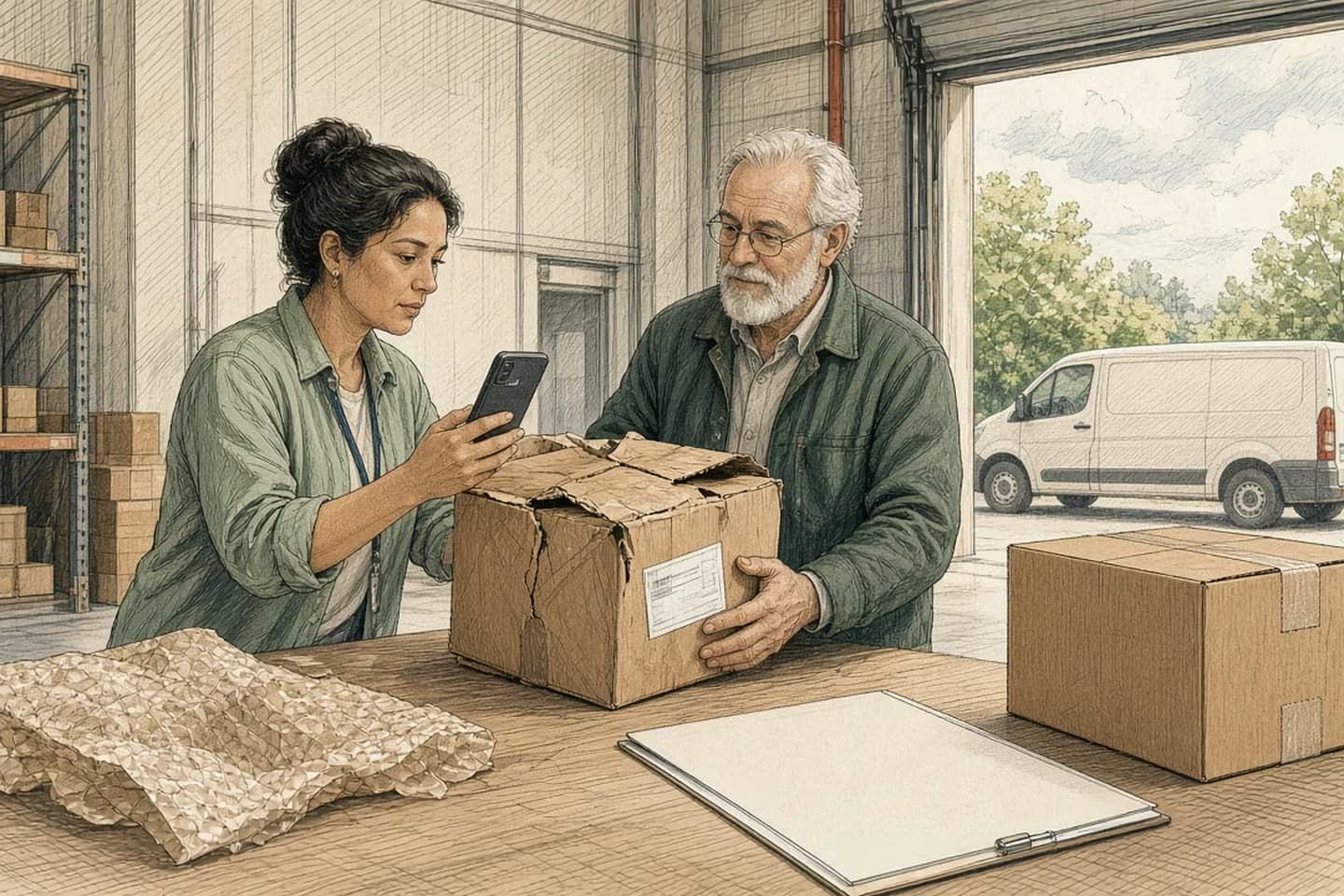
When a delivery arrives damaged or short, collect clear photo evidence and order identifiers before you refund or reship. Train support on a short evidence list, store the images on the order, then file the carrier claim and choose make-good. Guess-and-reship first is how you pay twice.
Before: make-good first, evidence later
A box arrives crushed. The customer emails two dark photos of a cardboard corner and asks for a replacement. The macro says sorry and ships another unit overnight. A week later someone tries to file a carrier claim. The photos do not show the label, the seal, or the damaged goods clearly. The claim stalls. You have eaten the cost of two shipments and a premium outbound.
That before picture is common in small fulfillment teams under review pressure. Kindness without a one-page evidence rule becomes a quiet leak. The team feels generous; finance sees unexplained reship volume; the carrier sees a weak packet.
Decision guide
Before vs after a damage report
| Consideration | Before (make-good first) | After (evidence then make-good) |
|---|---|---|
| First reply | Refund or reship immediately. | Acknowledge + evidence checklist. |
| Photos | Optional, lost in email. | Required set stored on the order. |
| Claim | Filed late, weak pack. | Filed with label and damage clear. |
| Cost | Two shipments, no recovery. | Make-good with a path to claim. |
| Tone | Kind but leaky. | Kind and specific. |
After: evidence window, then make-good
Flip the order of operations without becoming hostile:
- Acknowledge same day. Empathy first; no accusation that the customer caused it.
- Ask for a fixed evidence set. Whole parcel with label readable; close-up of damage; contents in the box; packing materials if relevant; order number in the reply. Include a simple how-to image in the macro so people know what "label readable" means.
- Park the photos on the order record—not only in a shared inbox thread that auto-deletes.
- Decide make-good. Reship, refund, partial credit, or return-to-sender per your policy and item value.
- File the carrier claim with the same evidence pack while it is fresh.
High-value or repeating SKUs may justify an outbound photo at pack time (seal and label). That is optional insurance for your side. It does not replace inbound customer evidence when the damage happens after handoff.
Sequence of work
Evidence window on a damage ticket
- Report
Customer says damaged or short.
- Evidence ask
Macro lists required photos and order id.
- Attach
Images stored on the order record.
- Make-good
Refund, reship, or partial per policy.
- Claim
Carrier filing uses the same pack.
Evidence is cheaper than a second shipment you cannot claim back.
What to put in the support macro
Write the ask so it feels like help, not a hoop:
"Sorry this arrived in bad shape. To replace it quickly and document it with the carrier, please reply with: (1) a photo of the whole package showing the shipping label, (2) a close-up of the damage, (3) a photo of the item inside the box. Once we have those, we will [reship / refund] per our policy."
Set expectations on timing. If you reship before photos for VIP thresholds, record a waiver on the order so claims and finance know why. If photos never arrive after reminders, follow your written close rule—do not leave tickets open forever on hope.
Warehouse and claims, one record. Support, warehouse, and whoever files claims should see the same damage tag on the order. Otherwise packing quality issues get blamed on carriers, and carrier damage gets blamed on pickers. A simple reason code helps: damaged in transit, short shipment, wrong item, packing failure.
Carriers differ on claim windows and photo rules. Keep your internal clock shorter than the strictest carrier you use. Store original filenames and upload timestamps. When a claim is denied, keep the denial note on the order so the next similar ticket does not invent a new process.
This pairs with returns promise continuity: the customer-facing promise and the back-office claim path must agree. Evidence is cheaper than a second shipment you cannot claim back.
Edge cases worth deciding once. - Partial damage to a multi-item box: photo each affected line, not only the outer carton.
- "Empty box" claims: photo of seal condition matters; so does weight on the label versus scale if you have it.
- International shipments: customs paperwork and photos both matter; do not assume a domestic macro fits.
- Wholesale or B2B receivers: ask for receiving dock photos with date stamps when their process allows.
Put those decisions on one page beside your refund authority rules so night-shift support is not improvising.
Training the team without freezing kindness
Run a thirty-minute drill with three real anonymized tickets: one clear carrier crush, one ambiguous "item not as described," one missing-contents claim. For each, have support draft the evidence ask and the make-good decision. Compare against your written policy. The goal is not identical wording—it is the same evidence bar and the same authority to spend.
Publish the evidence checklist where macros live. New hires should not learn it from folklore. Warehouse leads should see when photo quality is chronically poor for a carrier or a lane; that is an operations signal, not only a support annoyance.
Finance partners care about this because reship COGS and claim recoveries sit in different buckets. A monthly sample of ten damage tickets—evidence present, claim filed, claim paid or denied—teaches more than a vibe that "carriers never pay." If denials cite missing label photos, fix the macro. If denials cite late filing, fix the clock.
When to reship before photos anyway
Write the exceptions so people are not guessing. Examples: medical or safety-critical items, shipments above a dollar threshold where you still require photos within 24 hours after the reship, or repeat customers with clean history under a manager code. The point is intentional exceptions with names, not a culture where every agent invents urgency.
After the exception, still chase evidence for the claim. Make-good and recovery are parallel tracks. Mark the order "reshipped pending evidence" so claims does not assume the case is closed.
Put this into practice
We improve fulfillment operations so make-good and claims share one record. If reships are outrunning your claim recoveries, talk to us.
Share the policy with suppliers when you dropship. If a supplier ship-from address is on the label, agree in advance who collects photos, who files the claim, and who funds the make-good while the claim is open. Unspoken assumptions between merchant and supplier are a second leak beside the carrier process.
Close the loop with the customer after the claim outcome when policy allows. A short note that you documented the damage helps even when you already made them whole. It also trains better photos next time without sounding accusatory.
If you use outsourced support, put the evidence checklist in the vendor playbook and audit a sample of tickets monthly. Outsourcers optimize for handle time unless you score them on evidence completeness too.
Photograph quality tips belong in the macro: daylight, label readable, one item per frame when possible. A little coaching raises claim success more than another apology paragraph. Keep the tone practical, never accusatory.
Related work: Paddle8.
We build alongside the people doing the work.
Bring us the problem you’re thinking about.