Most delivery problems were typed into the checkout.
A parcel comes back marked "insufficient address" because the apartment number never made it past the checkout form. Nobody did anything wrong, exactly. Seven plain rules keep that address true from the moment it's typed to the moment it's delivered.
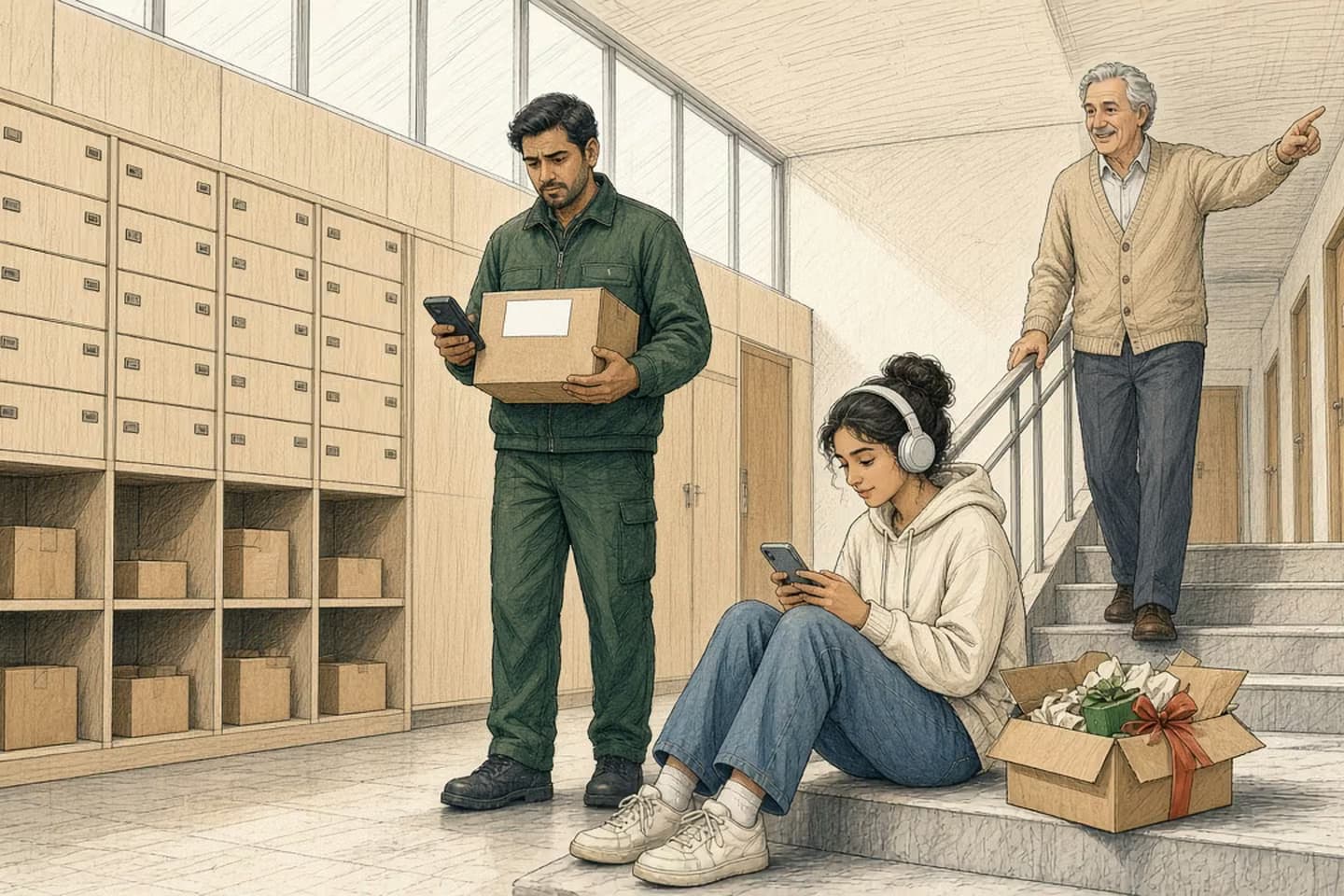
Many delivery exceptions start in the address field, not the warehouse. Check addresses while the customer is still on the page and offer corrections rather than silently rewriting them. Keep what they typed next to the corrected version. Give apartments, delivery notes and international formats real room. Decide who may change an address after an order and until when, usually until the label prints, and treat a late change plus rush shipping as worth a second look. When a carrier can't deliver, route it to a named owner with a clear next step.
The parcel that came back
A customer orders a gift for her brother. She types his street address, his city and his postcode, and she puts the apartment number at the end of the street line, after a comma, the way she always writes it. The checkout form trims the line to fit the label. The parcel goes out on time, sits at the carrier's depot for a few days, and comes back marked "insufficient address."
Nobody did anything wrong, exactly. The customer typed what she knew. The form did what it was built to do. The warehouse shipped what the order said. But the customer is now writing to support, the brother's birthday has passed, and someone has to decide whether to reship at the store's expense.
A lot of fulfillment trouble looks like this. It shows up in the warehouse or at the carrier, but it started in the checkout. An address isn't a field. It's the first promise in the fulfillment chain.
Here are seven rules of thumb we use when we look at how a store captures and carries addresses.
How the work moves
Where an address can go wrong
- Typed at checkout
Second line missing or cut short; unfamiliar format.
- Corrected or suggested
A lookup helps, or quietly changes it to the wrong place.
- Changed after the order
Edit reaches the store but not the warehouse.
- Printed on the label
Fields trimmed; delivery notes left behind.
- Carrier can't deliver
Notice lands nowhere; the customer finds out first.
Rules one and two: check it while they're there, and keep what they typed
Check it before they leave. The cheapest moment to fix an address is before the customer clicks "Place order." Once they've left the page, every fix needs an email, a reply and a person.
Most stores can use an address lookup or validation service that suggests a match as people type, or flags an address it can't find. Use it, but use it gently. A suggestion with a clear "use this" or "keep mine" works. A form that refuses to continue because the service doesn't recognize a new building is a lost sale.
Keep what they typed. When an address is corrected, by the customer accepting a suggestion or by a service in the background, store both versions: what the customer entered and what you shipped to.
It sounds fussy. It pays for itself the first time a parcel goes astray and someone needs to answer "did we change it, or did they type it that way?" It also helps you spot patterns, like a lookup service that keeps "fixing" one neighborhood's addresses into the wrong ones. And it gives support a fair way to talk to the customer: "here's what you entered, here's what the label said" is a much easier conversation than an argument about whose fault it was.
An address isn't a field. It's the first promise in the fulfillment chain.
Rules three and four: make room for real addresses
Give the second line a real job. Apartment, unit, floor, building name, company name. Label it plainly, and make sure it actually travels all the way to the shipping label without being cut off. Check this end to end at least once: put a long, awkward address through your own checkout and look at the label that prints.
Don't force one country's format on everyone. If you ship abroad, postcodes, regions and the order of address lines vary. Rural addresses, PO boxes and military addresses each have their own quirks, and some carriers won't deliver to some of them. Decide what you accept and say so at checkout, rather than discovering it at the depot.
A delivery-notes field helps, too, as long as someone has decided where those notes go. If they're printed on the label, keep them short. If they only live in your order system, the driver will never see them, and customers should know that.
Rules five and six: decide who can change an address, and until when
Customers change their minds. They realize they sent it to the old flat, or they'll be away and want it at work. The question isn't whether to allow changes, but who can make them and up to which point.
Set a cut-off. For most stores, the natural one is when the label is printed. Before that, a change is an edit. After it, it's a carrier problem, and the options shrink to intercepting the parcel, if the carrier offers that, or waiting for it to come back.
Make the change reach the warehouse. The most common failure here isn't a bad policy. It's support updating the address in the store while the warehouse has already pulled the order with the old one. Whoever edits the address needs to see the order's current fulfillment status, and the warehouse needs to hear about the change, not just the storefront.
Take a second look at some changes. A new address added after the order, combined with a switch to the fastest shipping, is a pattern worth a pause before you ship. Most of the time it's innocent. A quick check is cheaper than the times it isn't.
Decision guide
A late address change, two ways
| Consideration | No rule | Written rule |
|---|---|---|
| Who can change it | Anyone with store access. | Customer before cut-off; support after, with status in view. |
| Until when | Whenever someone gets to it. | Until the label prints. |
| Warehouse told | Maybe. | Always, with the order's status checked. |
| Late change plus rush shipping | Shipped as is. | A quick check before it goes. |
Rule seven: give the undeliverable parcel an owner
When a carrier can't deliver, it usually tells you, in a tracking event or a return notice. Too often that notice lands in a shared inbox, or nowhere, and the store finds out when the customer asks where their order is.
Treat it as an exception with a name on it. Someone gets told, the customer gets contacted with the address you had on file and the one they typed, and there's a written rule for what happens next: reship once at your cost if the error was yours, reship at theirs if it wasn't, or refund when the parcel comes back. Our notes on mapping the promise past checkout and why checkout is not the finish line cover the wider version of this.
Start with the parcels that came back
Pull the last few months of parcels returned for address problems, and for each one look at the address as the customer typed it. You'll usually find two or three causes that explain most of them: a truncated second line, a lookup that "corrected" the wrong way, a late change that never reached the warehouse.
Fix those first. They're rarely big projects: a field that needs to be longer, a lookup setting to change, a status check added to the screen support uses to edit orders. Then put one awkward address through checkout, all the way to a printed label, every time someone changes the checkout or the shipping setup.
We connect storefronts, warehouses and carriers in our fulfillment operations and ecommerce work, so the address a customer typed is the one that arrives. If parcels keep coming back to you, tell us what you're seeing.
Related work: Paddle8.
We build alongside the people doing the work.
Bring us the problem you’re thinking about.