UPS raises the Additional Handling billable floor to 50 pounds on December 21. Re-cost the awkward boxes now
On December 21, 2026, UPS lifts the minimum billable weight for Additional Handling packages on Small Business Rates from 40 pounds to 50. Boxes that already trigger Additional Handling for size get more expensive even when the scale reads less.
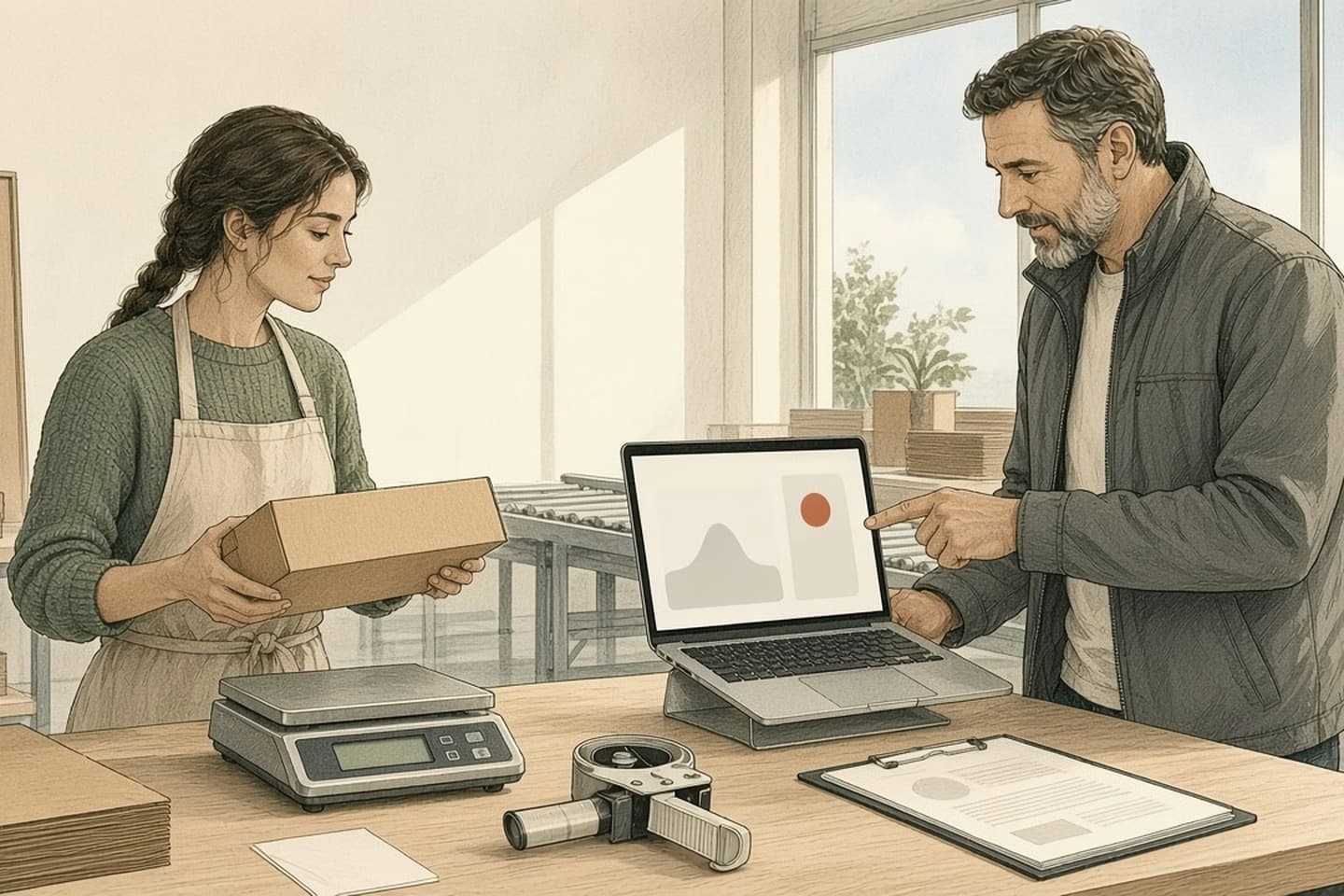
Effective December 21, 2026, UPS Small Business Rates raise the minimum billable weight for Additional Handling packages from 40 pounds to 50 pounds, alongside a published 4.5% rate increase and a 5% fuel surcharge on those rates. Re-cost every SKU that already hits Additional Handling for length, width or packaging shape—even light ones—because the billable floor moves under them. Decide whether to change the carton, the carrier mix, the checkout rate card or the product page promise before peak invoices arrive.
What changes on December 21
UPS's Small Business Rates page, read November 5, 2026, lists three changes effective December 21, 2026. Published Small Business Rates for Ground, Air and International rise 4.5 percent. A domestic and international fuel surcharge of 5 percent applies to those rates. And the minimum billable weight for Additional Handling packages rises from 40 pounds to 50 pounds.
That last line is the quiet margin killer. Additional Handling already catches packages that are long, wide, cylindrical, in metal or wood, or otherwise awkward—not only heavy ones. When a light-but-awkward carton triggers Additional Handling, UPS bills at least the minimum billable weight. Moving that floor from 40 to 50 means those cartons cost more even when the scale has not moved. The scale can still say 28 pounds. The invoice will bill as if it weighed 50.
If you ship on negotiated UPS contracts outside Small Business Rates, read your own agreement—floors and surcharges vary. If you are on Small Business Rates, treat December 21 as a packing-bench deadline, not only a finance spreadsheet update.
Decision guide
What Dec 21 changes on Small Business Rates
| Consideration | Change | Why ops cares |
|---|---|---|
| AH floor 40→50 lb | Light awkward boxes cost more. | Re-cost size-triggered SKUs |
| Rates +4.5% | Across Ground/Air/International. | Update contribution models |
| Fuel 5% | On Small Business Rates. | Include in the same workbook |
| Effective Dec 21 | Inside holiday traffic. | Fix cartons before invoices |
Which boxes suddenly cost more
Walk the packing bench with last month's Additional Handling invoice lines in hand. The examples are illustrative; your triggers follow UPS's published Additional Handling rules and your contract.
The long narrow shipper. A poster tube or tall lamp box that exceeds length thresholds triggers Additional Handling even when it weighs 12 pounds. Under the new floor it bills like a 50-pound package. Ask whether a fold-flat carton or a different carrier service removes the trigger entirely.
The metal tin gift set. Packaging material can trigger Additional Handling independent of weight. If holiday sets ship in tins, cost the tin-plus-outer-box against a mailer that does not trip the rule.
The almost-cube that is slightly over. A carton a few inches over a dimension limit is often cheaper to redesign than to absorb a higher billable floor all year.
The "we always used this box" SKU. Tribal knowledge is how floors hide. Pull the top twenty Additional Handling SKUs by charge count, not only by revenue. High-frequency awkward shippers matter more than one heavy machine.
Pair this with the same packing-bench discipline we used for UPS surge fees by origin ZIP and other carrier-surcharge notes: the invoice is decided when someone reaches for a carton, not when finance opens the PDF.
The scale can still say 28 pounds. The invoice will bill as if it weighed 50.
Re-cost before you rewrite the rate card
Do the math in this order.
- Export AH lines for ninety days. Tag each with SKU or carton type.
- Reprice those lines as if the billable weight were 50 pounds under the new rates and fuel surcharge. You do not need a perfect tariff engine—directionally right is enough to rank SKUs.
- Split the list into redesign (carton or void fill), re-source (different service or carrier), or accept (raise the product's shipping contribution).
- Update checkout only after the bench decision. Publishing a higher flat rate while still shipping the old tube trains customers to expect a price you have not earned.
- Tell CS which SKUs changed and why, so "why is shipping more?" has an answer that is not "UPS."
Also watch the interaction with peak calendars. A December 21 effective date sits inside holiday return and late-gift traffic. If your peak box is the awkward one, fix it before the floor moves—not during the first week of January when invoices land.
Where teams get this wrong
They only model the 4.5 percent increase. The floor change hits a different population of packages. Model both.
They change the web rate without changing the carton. Margin still leaks at the bench; customers only see a higher number.
They assume Additional Handling is "for heavy stuff." Size and packaging triggers are enough. Train new packers on the triggers with physical examples on the table.
They forget multi-warehouse origin effects. If you already track surge-by-origin behavior, keep AH floors in the same workbook so one SKU does not look fine from warehouse A and awful from warehouse B.
A two-week packing sprint
Day 1–2: Export AH lines; photograph the top twenty cartons.
Day 3–5: Prototype alternative cartons or orientations for the top ten by charge count.
Day 6–8: Re-rate with the 50-pound floor and new rate card assumptions; pick redesign vs accept.
Day 9–10: Update packing work instructions, WMS carton suggestions and checkout if needed.
Day 11–14: Spot-check live orders; confirm CS macros.
Document the before/after billable weight for each redesigned SKU. That packet is what you bring to the carrier QBR and to whoever owns contribution margin.
Sequence of work
Two-week packing sprint
- Days 1–2
Export AH lines; photograph cartons.
- Days 3–5
Prototype alternative packs.
- Days 6–8
Re-rate at 50 lb; choose actions.
- Days 9–14
Update WMS, checkout, CS macros.
If you own the bench
Pull the Additional Handling lines this week. Rank by frequency. Decide redesign, re-source or accept before December 21. If you want help tying carton choices, WMS suggestions and checkout rates into one fulfillment operations change, get in touch with the AH export and the SKU photos.
One more practical note before you close the tab. Put the deadline on a shared calendar with a named owner, not a channel that everyone watches and no one owns. Committees do not ship carton changes, agent pilots or CDN cutovers. A single person who can say "green" or "blocked on X" keeps the work from restarting every Monday with the same open questions.
When you brief leadership, lead with the operating decision, not the vendor announcement. Executives do not need another slide about artificial intelligence or carrier math. They need to know what changes at the bench, in checkout, in the partner portal or in the release train—and who is accountable for the before-and-after measurement.
Keep a short evidence packet next to every change: the primary source URL, the date you verified it, the SKUs or environments in scope and the rollback path. That packet is what you bring to the QBR, the board update or the incident review. Memory and Slack threads are not evidence.
If outside help would finish the inventory, the redesign or the cutover faster than waiting for a quiet week that never comes, bring them into the first scoping conversation with the right TWIMCO team rather than after the first red invoice or console banner. Scheduled migrations beat emergency freezes.
One more practical note as you hand this to the next owner. Put the deadline on a shared calendar with a named owner, not a channel that everyone watches and no one owns. Committees do not ship carton changes, agent pilots or CDN cutovers. A single person who can say "green" or "blocked on X" keeps the work from restarting every Monday with the same open questions.
Related work: Spin Market.
We build alongside the people doing the work.
Bring us the problem you’re thinking about.