The TWIMCO notebook
Field notes.
Useful observations from inside the work.
For people building a better way.
Buying software · 28 notes
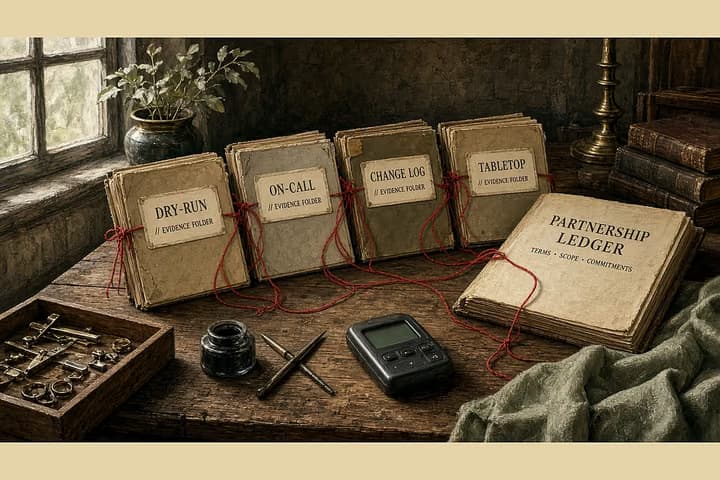
Don't sign an SLA you cannot open.
A percentage on a slide is not coverage. Ask for a recovery they already ran, a real on-call window, a past change notice, and a date to practice an incident with you.
Read the note ↗︎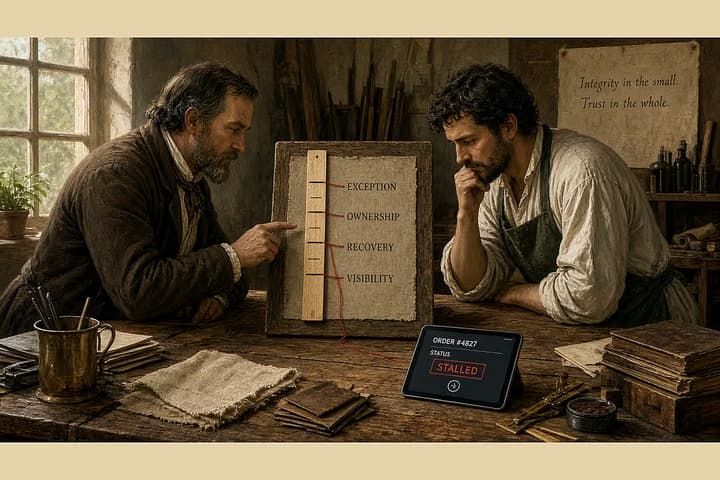
Score the demo by the exception path, not the happy path.
Every click works on the prepared account and the room nods. Two months later the first stuck case has no owner and no way back. Ask the vendor to show you the awkward path during the demo, and write down what you actually saw.
Read the note ↗︎
Write the incident matrix before the first P1.
The proposal says you'll be supported after launch. Then the first serious incident hits and it turns out "the team" doesn't answer a phone. People in named roles do, and the time to write those names down is before the bad hour.
Read the note ↗︎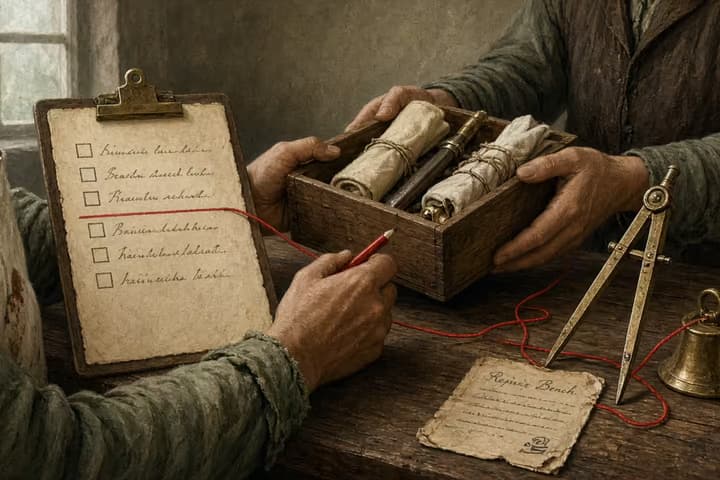
Score the handover by what the next team can do.
The zip arrived, the README is from mid-sprint, and the message says you should be good. Six weeks later nobody can deploy cleanly. A handover is finished when the next team can deploy, diagnose, recover and change the system on their own.
Read the note ↗︎
Write the brief before you pick the builder.
Before hiring a builder or prompting an AI app builder, write the job, boundaries, exceptions, success evidence and handover expectations. A brief outline you can use today.
Read the note ↗︎
What ongoing partnership should mean in a software contract.
After launch, decide who owns incidents, upkeep and change—and what evidence shows that coverage is real, not just promised.
Read the note ↗︎
What a useful software handover should include
Source code is one part of ownership. A useful handover lets the next team deploy, diagnose, recover and change the system with confidence.
Read the note ↗︎
AI app builder or engineering partner: how to choose
Choose around the work your system must do, the consequences of mistakes, and who will operate it after launch. A practical guide for founders and operations teams.
Read the note ↗︎A familiar problem? Let’s look closer.
Tell us where you want to go. We’ll find the first thing worth changing.
Tell us about it ↗︎