The TWIMCO notebook
Field notes.
Useful observations from inside the work.
For people building a better way.
Commerce · 125 notes
Some of your apps can edit your checkout.
One shopper on a Shopify keyboard store pressed Checkout and was quietly sent to a copy of the payment page on another site. He noticed. Most people wouldn't. Here's how to check where your own Checkout button really goes.
Read the note ↗︎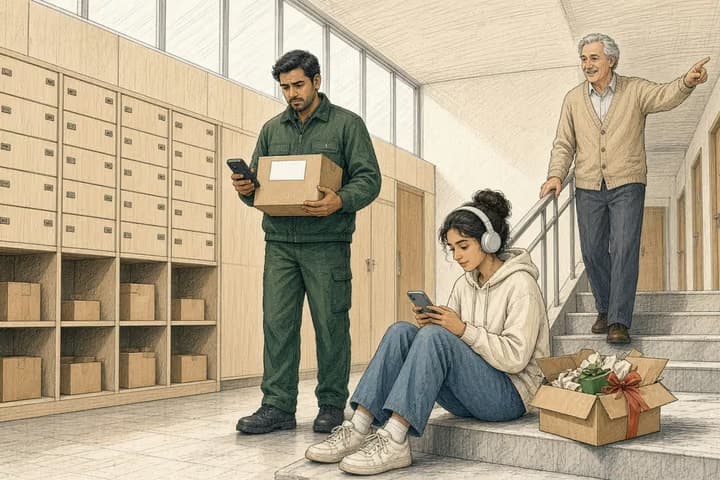
Most delivery problems were typed into the checkout.
A parcel comes back marked "insufficient address" because the apartment number never made it past the checkout form. Nobody did anything wrong, exactly. Seven plain rules keep that address true from the moment it's typed to the moment it's delivered.
Read the note ↗︎
Count the logins that can reach your customers.
On Tuesday, ASOS customers got a push alert from the ASOS app saying ASOS had been hacked. The attackers sent it. They got in through one login to a marketing tool, not the store itself. If you run a store, here's how to find your own version of that login.
Read the note ↗︎
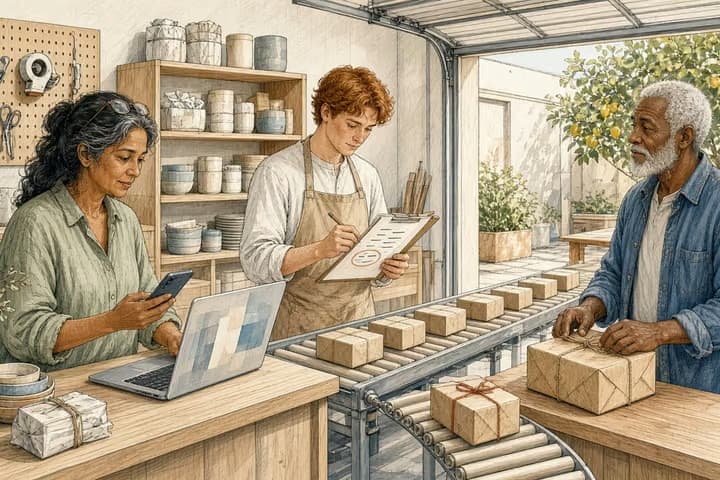
A gift set is three promises sold as one.
When the candle sells out on its own, the holiday set that contains it often keeps selling. Bundles look like one product on the storefront and behave like several in the warehouse, and peak season is when that difference gets expensive.
Read the note ↗︎
Before a limited drop, decide who should end up with it.
Target's overnight Pokémon card drop went sideways again. If you sell anything in short runs, the real question isn't how fast your checkout is. It's who you want holding the box when it's over.
Read the note ↗︎
Two customers booked the same Saturday. Here's what actually broke.
Saturday, 9:55 a.m. A family with a toddler and a photographer is at the studio door, and so is a fashion crew with a rail of clothes. Both have confirmations. Walking back through how it happened shows that nobody did anything wrong, which is exactly the problem.
Read the note ↗︎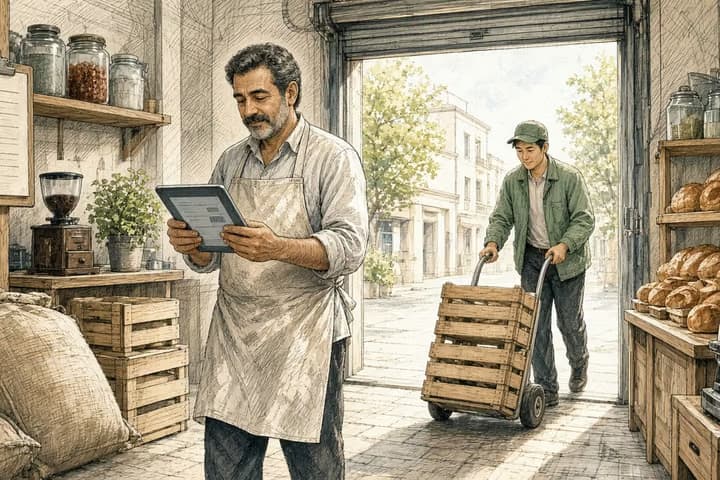
Your wholesale customers want to reorder, not browse.
Most wholesale buyers already know what they want. It's roughly what they ordered last month, sent over from a PDF price list by email. Build the portal for that before anything else.
Read the note ↗︎
Before you buy AI search, read what people couldn't find.
Somewhere in your analytics is a list of things people typed into your search box and got nothing back. It's the most honest research you own, and it often explains more than a new search engine would.
Read the note ↗︎
Name auth, capture, and settle before checkout ships.
Order placed, says the screen. Somewhere else the card hold may or may not exist and the stock may or may not be reserved. When those feel like one moment and are really several, you end up shipping what you never captured.
Read the note ↗︎
A macro may not invent a promise.
A customer asks where their order is, and the macro answers in a confident, complete sentence. The warehouse and the payment record never said that sentence. Support copy should repeat promises the system already holds and escalate the rest.
Read the note ↗︎
The route should not live in one person’s head.
Someone on your team knows which carrier will take a crate that size and which lane to avoid this season. Their spreadsheet holds names and rates, but the judgment lives in their head. Sit with them before you build the shipping flow.
Read the note ↗︎
The quote is not the charge until you prove it.
The buyer agreed to a total. Then the payment capture came out different, or the invoice did, or both. Nobody lied. Three systems each told a local truth, and those numbers are worth lining up before the cart is allowed to go out.
Read the note ↗︎
Before peak, re-read last year's rescued orders.
Carrier peak fees widen in late October. Before then, pull ten orders your team had to rescue last holiday and follow each one back to the moment it first went wrong.
Read the note ↗︎
TikTok's new buy button is the easy part.
TikTok now lets people buy from your own store without leaving the feed. Before you say yes for the holidays, picture the night a video takes off, and ask what your stock count, product pages and support inbox would do.
Read the note ↗︎
Your first suppliers need a person, not a form.
Your launch got sign-ups. Most of those suppliers still can't take an order. Walk one of them from yes to first payout and you'll see what the signup form left out.
Read the note ↗︎
The clock does not advance on a promise.
Someone says the deal is ready while someone else is still waiting on a signature or a funds check that was "basically done." In a complex close, the clock should move when named conditions are met and proven, not when the room feels finished.
Read the note ↗︎
Detect inventory truth drift before you trust the count.
The storefront says three, the warehouse says one, the marketplace says two. Someone ships on one number while someone else promises a buyer on another. Counts will disagree under load. The trouble starts when nobody decided what happens then.
Read the note ↗︎
Who may refund what—before macros invent policy.
If a support macro can say "we'll refund that," it's already making policy. Decide who can approve which amounts and reasons, and what the payment record has to show, before anyone promises money back.
Read the note ↗︎
Name checkout authority before the agent may charge.
Shopping agents can fill a cart and call checkout tools. Before yours may complete a charge, walk through the ceiling, the credential, and who still has to say yes.
Read the note ↗︎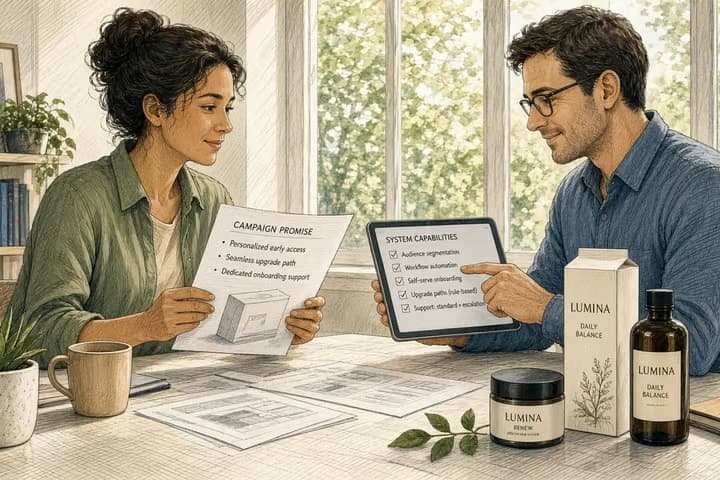
Diff the customer promise against the system before the campaign ships.
Marketing has locked the claim and the creative looks great. Checkout still can't split a shipment, and support has no script for the case the campaign will create. Put each promise beside what the systems can actually do before the spend commits.
Read the note ↗︎A familiar problem? Let’s look closer.
Tell us where you want to go. We’ll find the first thing worth changing.
Tell us about it ↗︎