The TWIMCO notebook
Field notes.
Useful observations from inside the work.
For people building a better way.
AI in practice · 28 notes

Define shadow-mode success before you promote the agent.
Weeks into shadow mode, the agent is still proposing and people are still doing the work. Someone asks if it's time to let it act, and the answer is a shrug. Shadow mode only helps if you decided at the start what would count as ready.
Read the note ↗︎
Treat agent changes like releases—not like prompt doodles.
Someone edits a system prompt on Friday. On Monday the agent does things the team thought were gated, and nobody knows which edit did it or how to put it back. A change to what an agent may do is a release, even when it doesn't look like one.
Read the note ↗︎
Score AI product images on fidelity, not polish.
The color is slightly off, the material is one you don't sell, and the image still looks finished. Image tools are good at plausible. Catalog work needs pictures that tell the truth about what you'll actually ship, and someone named to say so.
Read the note ↗︎
Write the agent a job spec, not a vibe.
Agent projects still start with adjectives like helpful and on brand. An agent that takes actions needs a job instead, written plainly enough that you could hand it to a new hire on one page.
Read the note ↗︎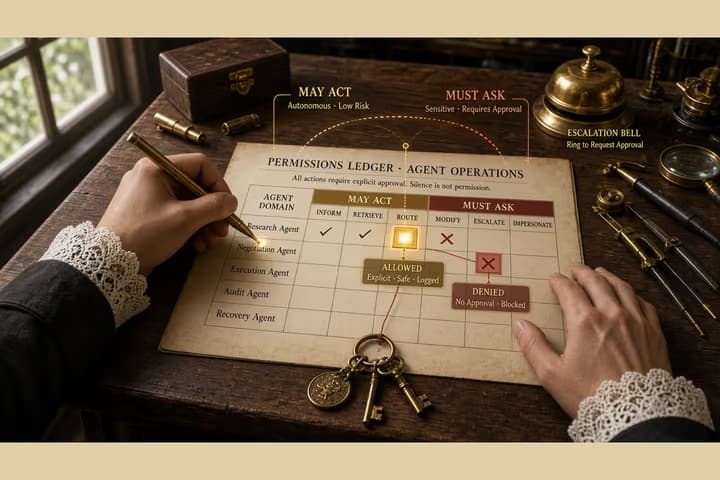
Give the agent a permission matrix, not a pep talk.
A warm, careful system prompt won't stop an agent from changing a record it should only have read. Write down what it may read, suggest and change, who signs off on the risky step, and what the audit trail has to show.
Read the note ↗︎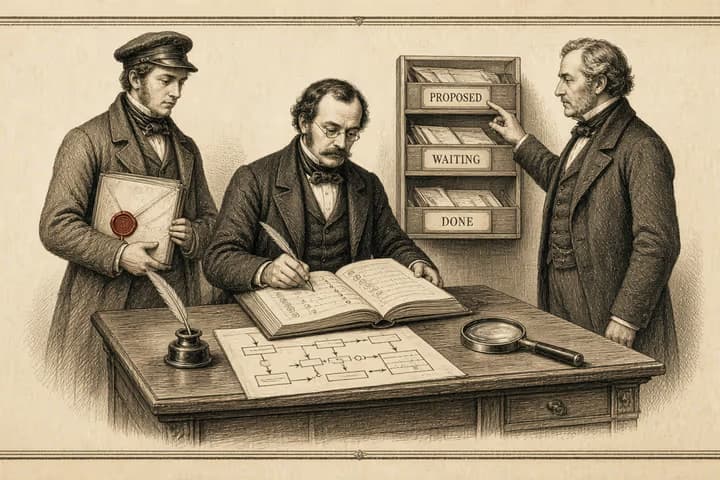
Is this workflow ready for AI?
Before adding AI to a process, score it on handoffs, exceptions, visible state, recovery and who may approve changes. A readiness checklist you can use as a worksheet.
Read the note ↗︎
How to review AI-generated product imagery before it goes live
A polished image can still misrepresent the product. Build a review process around product fidelity, intended use and a clear approval decision.
Read the note ↗︎
What it takes to let AI agents operate a real business system
Natural language is the interface. Useful agent operation also needs bounded actions, permissions, visible state, recovery and a way to judge whether the work succeeded.
Read the note ↗︎A familiar problem? Let’s look closer.
Tell us where you want to go. We’ll find the first thing worth changing.
Tell us about it ↗︎