The TWIMCO notebook
Field notes.
Useful observations from inside the work.
For people building a better way.
Commerce · 32 notes

TikTok's new buy button is the easy part.
TikTok now lets people buy from your own store without leaving the feed. Before you say yes for the holidays, picture the night a video takes off, and ask what your stock count, product pages and support inbox would do.
Read the note ↗︎
Your first suppliers need a person, not a form.
Your launch got sign-ups. Most of those suppliers still can't take an order. Walk one of them from yes to first payout and you'll see what the signup form left out.
Read the note ↗︎
The clock does not advance on a promise.
Someone says the deal is ready while someone else is still waiting on a signature or a funds check that was "basically done." In a complex close, the clock should move when named conditions are met and proven, not when the room feels finished.
Read the note ↗︎
Detect inventory truth drift before you trust the count.
The storefront says three, the warehouse says one, the marketplace says two. Someone ships on one number while someone else promises a buyer on another. Counts will disagree under load. The trouble starts when nobody decided what happens then.
Read the note ↗︎
Who may refund what—before macros invent policy.
If a support macro can say "we'll refund that," it's already making policy. Decide who can approve which amounts and reasons, and what the payment record has to show, before anyone promises money back.
Read the note ↗︎
Name checkout authority before the agent may charge.
Shopping agents can fill a cart and call checkout tools. Before yours may complete a charge, walk through the ceiling, the credential, and who still has to say yes.
Read the note ↗︎
Diff the customer promise against the system before the campaign ships.
Marketing has locked the claim and the creative looks great. Checkout still can't split a shipment, and support has no script for the case the campaign will create. Put each promise beside what the systems can actually do before the spend commits.
Read the note ↗︎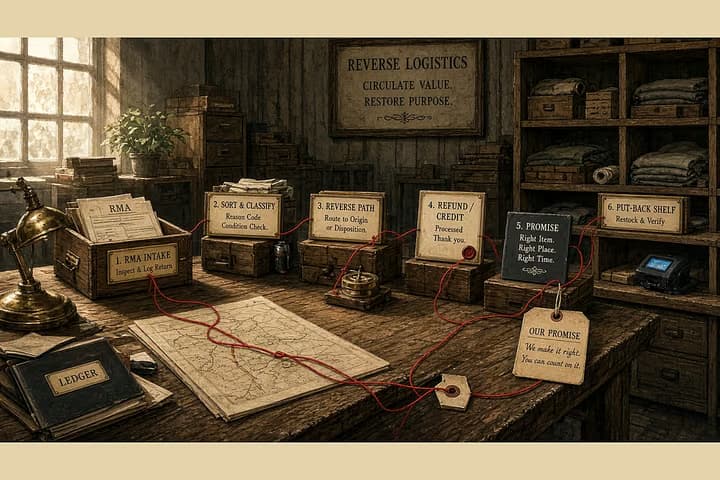
Keep the returns promise continuous across six stations.
Refund on the way, says the email, while the warehouse is still deciding what came back. A partial return gets refunded in full out of habit. The way back needs as much care as checkout, or the promise breaks somewhere in between.
Read the note ↗︎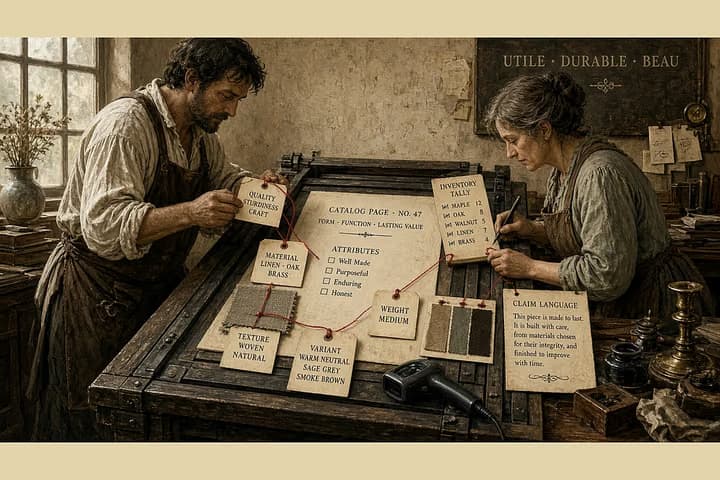
Score catalog truth before you publish the claim.
Photos, bullets, a price. The page looks finished, but a listed size was never received, the stock number is a cache, and the copy promises a ship speed you no longer keep. Publishing a listing is a promise to fulfill it.
Read the note ↗︎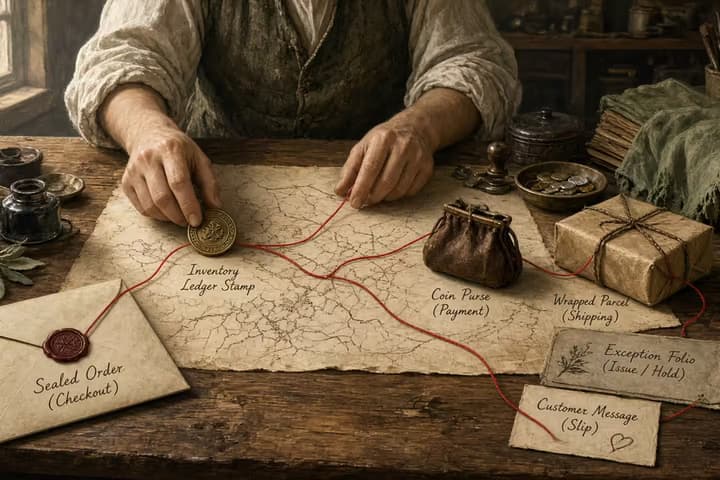
Map the promise past checkout.
At checkout the customer hears one promise about what's coming and when. Inside the company it's split across inventory, payment, the warehouse, the carrier and support, and when those disagree, the customer is the first to notice.
Read the note ↗︎
Catalog the exceptions before you automate the marketplace.
Operators know a marketplace by the cases that don't fit. A listing missing an attribute, a payment captured for an order that can't ship, a dispute after the deadline. Automate only the clean sale and that pile just grows faster.
Read the note ↗︎
Checkout is not the finish line.
Your customer experiences one promise. Your systems need to carry it all the way through.
Read the note ↗︎A familiar problem? Let’s look closer.
Tell us where you want to go. We’ll find the first thing worth changing.
Tell us about it ↗︎