The TWIMCO notebook
Field notes.
Useful observations from inside the work.
For people building a better way.
392 notes
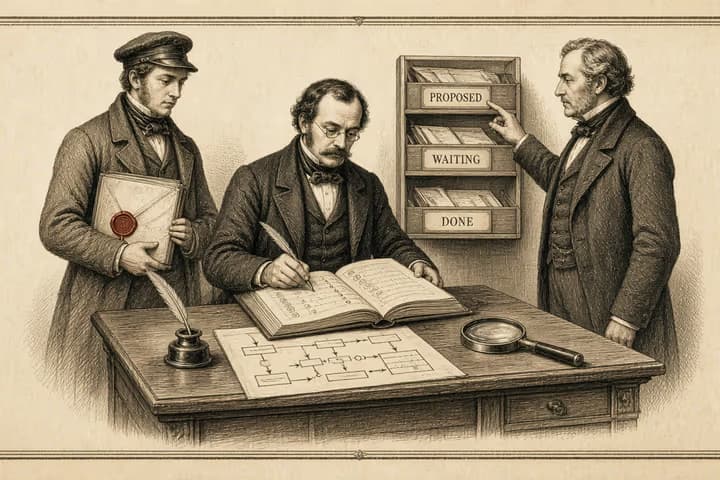
Is this workflow ready for AI?
Before adding AI to a process, score it on handoffs, exceptions, visible state, recovery and who may approve changes. A readiness checklist you can use as a worksheet.
Read the note ↗︎
What ongoing partnership should mean in a software contract.
After launch, decide who owns incidents, upkeep and change—and what evidence shows that coverage is real, not just promised.
Read the note ↗︎
Scope the automation before you buy the tool.
Map the handoff, owners and exception path first. Tool choice is easier once the job is clear—and riskier when it is not.
Read the note ↗︎
Name the exception before you automate the happy path.
The work that breaks automation is usually the exception someone already handles by judgment. Design that path before you wire the clean one.
Read the note ↗︎
How to review AI-generated product imagery before it goes live
A polished image can still misrepresent the product. Build a review process around product fidelity, intended use and a clear approval decision.
Read the note ↗︎
What a useful software handover should include
Source code is one part of ownership. A useful handover lets the next team deploy, diagnose, recover and change the system with confidence.
Read the note ↗︎
What it takes to let AI agents operate a real business system
Natural language is the interface. Useful agent operation also needs bounded actions, permissions, visible state, recovery and a way to judge whether the work succeeded.
Read the note ↗︎
AI app builder or engineering partner: how to choose
Choose around the work your system must do, the consequences of mistakes, and who will operate it after launch. A practical guide for founders and operations teams.
Read the note ↗︎
The work between the screens.
The real requirements often appear when someone shows you how they get through an ordinary day.
Read the note ↗︎
Checkout is not the finish line.
Your customer experiences one promise. Your systems need to carry it all the way through.
Read the note ↗︎
An agent needs a job, not a personality.
Start with a responsibility, a boundary, and a way to tell whether the work was done well.
Read the note ↗︎
Start with the handoff.
The most useful place to automate may be the space between two perfectly good tools.
Read the note ↗︎A familiar problem? Let’s look closer.
Tell us where you want to go. We’ll find the first thing worth changing.
Tell us about it ↗︎