The TWIMCO notebook
Field notes.
Useful observations from inside the work.
For people building a better way.
391 notes
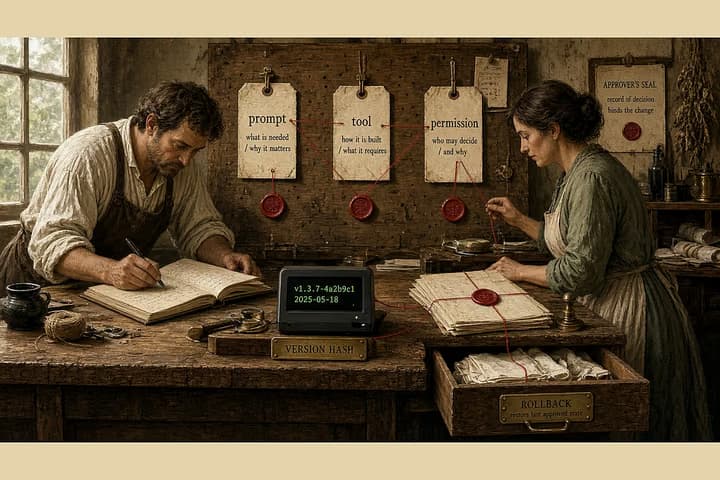
Treat agent changes like releases—not like prompt doodles.
Someone edits a system prompt on Friday. On Monday the agent does things the team thought were gated, and nobody knows which edit did it or how to put it back. A change to what an agent may do is a release, even when it doesn't look like one.
Read the note ↗︎
What must live in the record—not in chat.
An approval happens in a channel and a screenshot becomes the proof. Months later nobody can say who decided what, or on which evidence. If closing the tab loses the fact, it was never really recorded.
Read the note ↗︎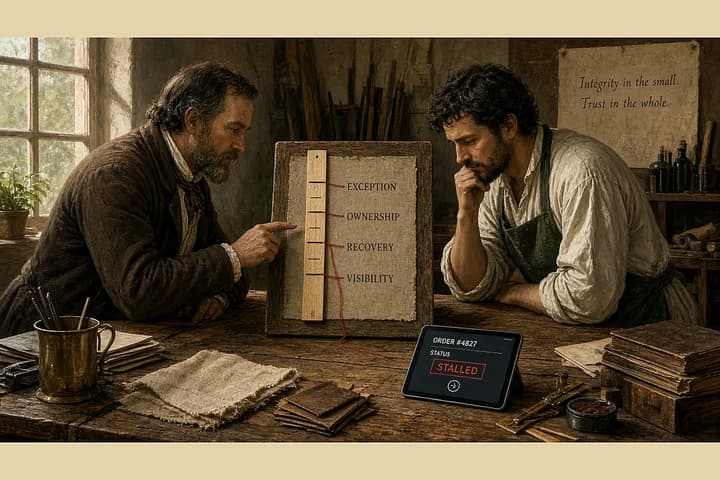
Score the demo by the exception path, not the happy path.
Every click works on the prepared account and the room nods. Two months later the first stuck case has no owner and no way back. Ask the vendor to show you the awkward path during the demo, and write down what you actually saw.
Read the note ↗︎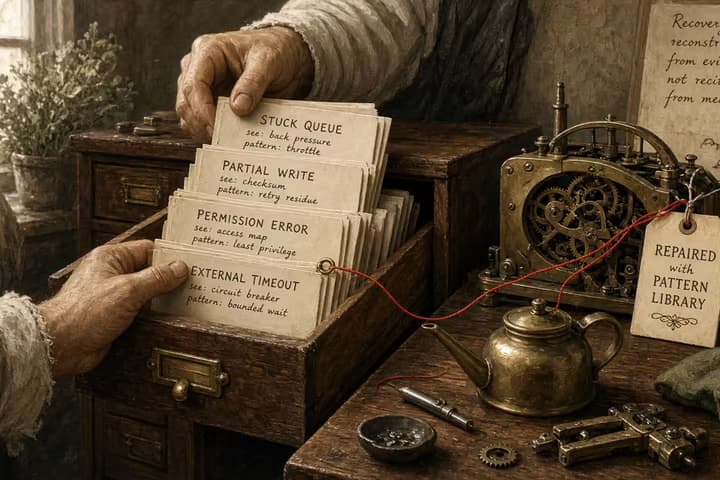
Recover with a pattern library, not folklore.
The queue is stuck, a write landed on only one side, and whoever is on call is working from memory. That gets you a different recovery every time, sometimes the one that makes things worse. Short, rehearsed steps beat improvising at 2 a.m.
Read the note ↗︎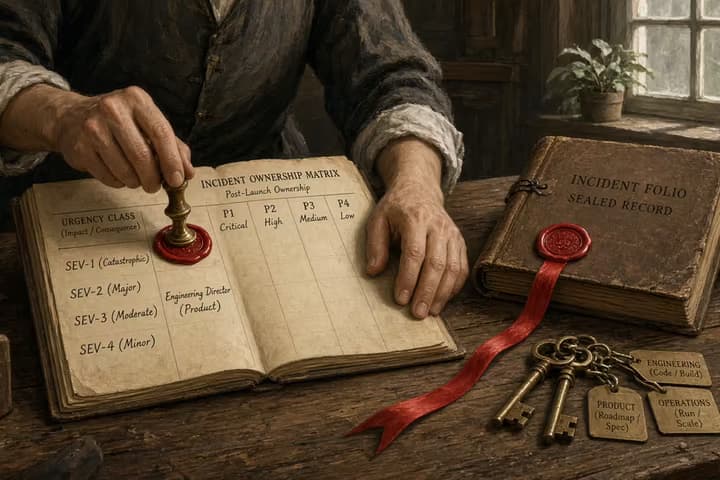
Write the incident matrix before the first P1.
The proposal says you'll be supported after launch. Then the first serious incident hits and it turns out "the team" doesn't answer a phone. People in named roles do, and the time to write those names down is before the bad hour.
Read the note ↗︎
Design the exception path on a canvas, not in a hallway.
Payment cleared but inventory didn't. The warehouse can't keep the window the customer was promised. The clean path always gets built first and the awkward cases arrive next sprint as a pile. It goes better the other way around.
Read the note ↗︎
Specify visible state, not just a shared screen.
Two people look at the same screen. One thinks the work is done, the other thinks it's waiting on a carrier, and an agent reading it will confidently pick a side. Trust comes from state kept in a record, not implied by a color.
Read the note ↗︎
Score AI product images on fidelity, not polish.
The color is slightly off, the material is one you don't sell, and the image still looks finished. Image tools are good at plausible. Catalog work needs pictures that tell the truth about what you'll actually ship, and someone named to say so.
Read the note ↗︎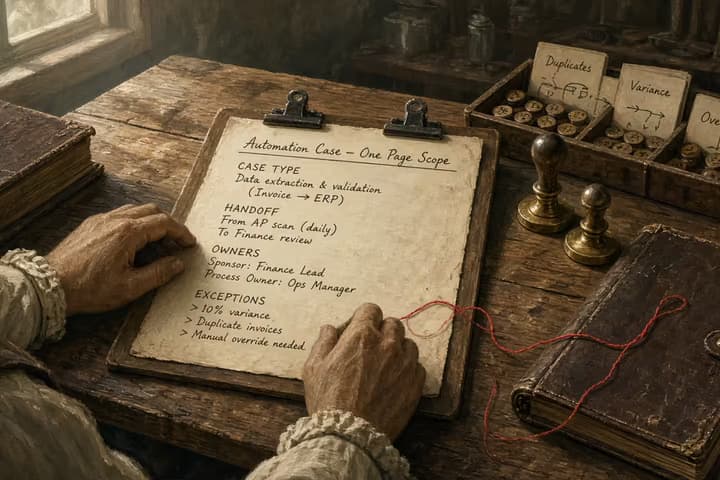
Put automation scope on one page before you buy.
It looked capable in the demo. After the contract, the awkward cases still live in inboxes and nobody can say what success looks like. Usually the tool wasn't the problem. The job was never written down, and one page would have done it.
Read the note ↗︎
Map the promise past checkout.
At checkout the customer hears one promise about what's coming and when. Inside the company it's split across inventory, payment, the warehouse, the carrier and support, and when those disagree, the customer is the first to notice.
Read the note ↗︎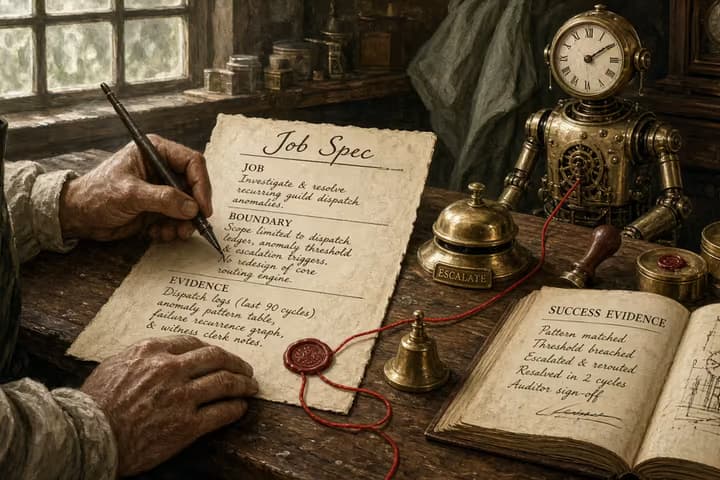
Write the agent a job spec, not a vibe.
Agent projects still start with adjectives like helpful and on brand. An agent that takes actions needs a job instead, written plainly enough that you could hand it to a new hire on one page.
Read the note ↗︎
Score the handover by what the next team can do.
The zip arrived, the README is from mid-sprint, and the message says you should be good. Six weeks later nobody can deploy cleanly. A handover is finished when the next team can deploy, diagnose, recover and change the system on their own.
Read the note ↗︎
Measure operational AI by the work, not the demo.
Token counts and thumbs-up ratings flatter a demo. For an agent doing real work, ask plainer things. Did the record show the job finished? What happened when it stopped halfway? Have its permissions quietly grown?
Read the note ↗︎
Catalog the exceptions before you automate the marketplace.
Operators know a marketplace by the cases that don't fit. A listing missing an attribute, a payment captured for an order that can't ship, a dispute after the deadline. Automate only the clean sale and that pile just grows faster.
Read the note ↗︎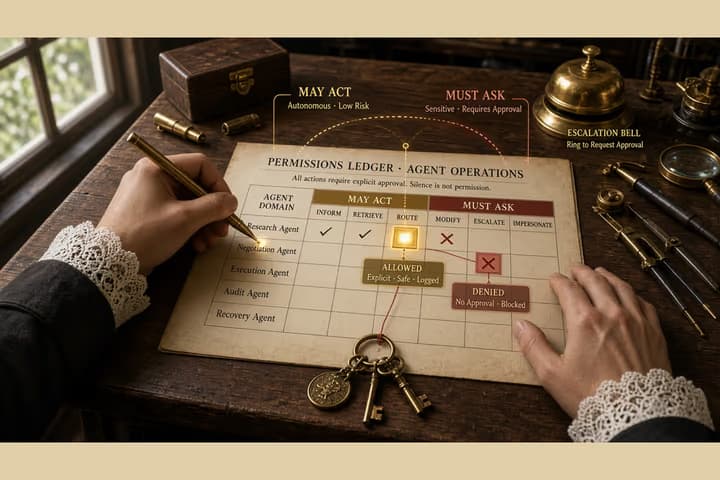
Give the agent a permission matrix, not a pep talk.
A warm, careful system prompt won't stop an agent from changing a record it should only have read. Write down what it may read, suggest and change, who signs off on the risky step, and what the audit trail has to show.
Read the note ↗︎
Some approvals should stay human.
When every agent action needs a human yes, people turn into slow middleware, and someone proposes removing the approvals altogether. Both go wrong. Some gates, like moving money or making a promise you can't take back, should stay with a person.
Read the note ↗︎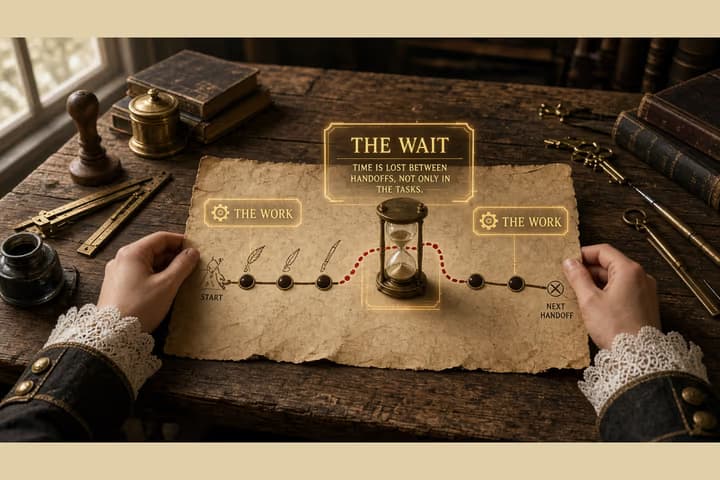
Map the waiting, not just the work.
Most of a case's life isn't spent being worked on. It sits in a queue, waits for an answer or a signature, or comes back to be redone. Speed up only the busy minutes and the calendar barely moves.
Read the note ↗︎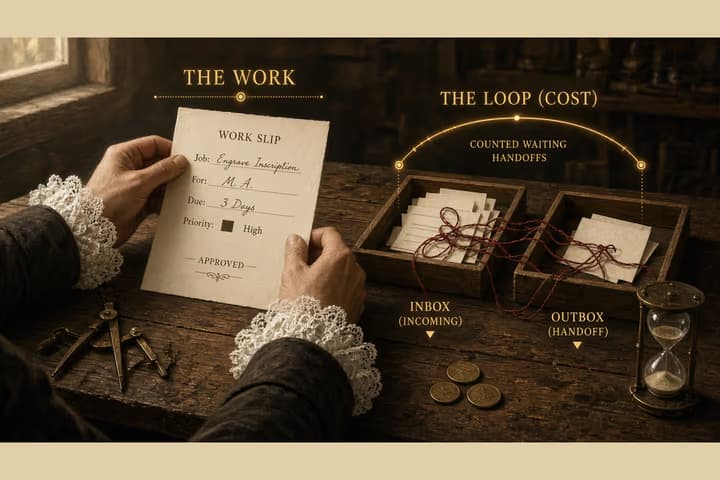
Count the cost of coordination, not just the work.
Both tools work and nothing looks broken, yet the same handoff keeps eating time in waiting, clarifying and redoing. Put your own numbers on that loop and see what a year of it really costs.
Read the note ↗︎
Write the brief before you pick the builder.
Before hiring a builder or prompting an AI app builder, write the job, boundaries, exceptions, success evidence and handover expectations. A brief outline you can use today.
Read the note ↗︎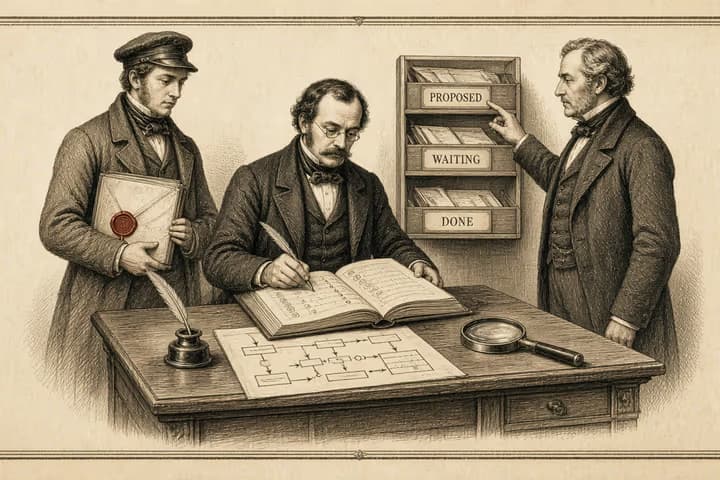
Is this workflow ready for AI?
Before adding AI to a process, score it on handoffs, exceptions, visible state, recovery and who may approve changes. A readiness checklist you can use as a worksheet.
Read the note ↗︎A familiar problem? Let’s look closer.
Tell us where you want to go. We’ll find the first thing worth changing.
Tell us about it ↗︎